


If you’re charging for drinks at a one-time event in New York City, you’ll need the State Liquor Authority’s one-day permit, and you should file it online at least 15 business days before the party. If the drinks are truly free and nobody pays a cent for them, you usually don’t need a permit at all.
That’s the whole thing in two sentences. The rest of this guide covers what the NYC one-day liquor permit actually allows, how the fee adds up when you have more than one bar, and the small mistakes that leave first-time hosts scrambling the week before. I’ve watched friends plan a beautiful fundraiser and then realize, nine days out, that they’d missed the filing window. You won’t be that person.
Selling Drinks Is What Triggers the Permit
The New York State Liquor Authority regulates the sale of alcohol. So the first question isn’t how big your party is. It’s whether money changes hands for drinks.
A backyard birthday where you pour wine for your friends isn’t a sale. Neither is a self-serve drink station at a private party where guests help themselves. A cash bar at a community fundraiser is a sale, plain and simple.
The gray areas trip people up. Selling tickets where the price includes drinks, handing out drink tickets at the door for a fee, or setting a “suggested donation” jar next to the wine can all look like sales. The permit follows the money: if guests pay for a drink in any way, plan on filing.
The permit follows the money: if guests pay for a drink in any way, plan on filing.
If you’re unsure about your setup, ask the SLA directly before the deadline passes. A five-minute question now beats a shut-down bar later.
One more thing to check early. If your venue already holds its own liquor license, talk to the venue before you do anything else. Licensed restaurants, bars and many event spaces have their own rules about who serves alcohol on their premises, and their license usually decides how the bar runs.
What the One-Day Permit Actually Covers
Here’s the good news for a first-timer: this permit is pretty approachable. According to the city’s guidance on the New York State Liquor Authority, anyone can apply, and there’s no food requirement for this permit type. You don’t need to be a business or hire a caterer to qualify.
The permit used to be limited to beer, wine and cider. It has since been expanded to cover liquor too, so a full cocktail bar is on the table.
It’s valid for 24 hours. A gala running from 7 p.m. to 1 a.m. sits comfortably inside one permit. A weekend street fair running Saturday and Sunday is a different story, since each day needs its own coverage.
The Fee Is Counted Per Bar
The SLA’s page on permits available online lists the fee as $36 per point of sale per day. A point of sale is each spot where drinks are sold, which at most events means each bar.
So the math looks like this:
- One bar for one evening: $36
- Two bars, say one by the entrance and one on a Manhattan rooftop, for one evening: 2 × $36 = $72
- Three bars at a larger gala: 3 × $36 = $108
Fees can change, so confirm the current amount on the SLA site when you apply.
The same SLA page also lists a limit on how often one location can use this permit: generally no more than four permits in a 12-month period. That rarely matters for a one-off wedding or birthday, but it can matter for a church hall or community center hoping to run a monthly beer night, since a monthly schedule starting in January would reach four by April. If your space hosts events regularly, confirm the current limit and how it’s counted with the State Liquor Authority before you plan the calendar.
Getting the Permit in Six Steps
Confirm you’re selling. Look at how guests will pay: cash bar, tickets, drink tickets, donations. If any of those involve alcohol, you’re filing.
Get the venue’s okay. Make sure the space allows outside alcohol sales and ask whether they require their own paperwork, such as insurance. Many venues do.
Count your bars. Decide how many points of sale you’ll have before you apply, since the fee and the application both depend on it.
Count back 15 business days. Weekends and holidays don’t count. For a Saturday event, the 15th business day before it lands on a Monday nearly three weeks earlier, and earlier still if a holiday falls in that stretch. Treat that Monday as the absolute latest, not the target.
Apply online and pay. Fill out the application on the SLA site with your event date, hours, address and bar count, and pay the fee per bar.
Bring the approved permit. Print it and keep a copy at each bar so whoever is pouring can show it if anyone asks.
Don’t Mix It Up With the Special Event Permit
There’s another SLA permit with a confusingly similar name. The Special Event Permit is meant for licensed businesses running things like tastings and promotions, and it’s filed 45 days ahead.
If you’re a private host or a nonprofit throwing a single party, that’s almost certainly not the one you want. The one-day permit is your form. I mention the other one only because the names are close enough that hosts sometimes end up filling out the wrong application.
Parks, Streets and Other States Have Their Own Say
The SLA permit covers selling alcohol. It doesn’t give you the right to use a public space. A street event needs its city permit first, and our guide to NYC block party permits walks through that side, including its much longer lead time. Parks have their own rules about alcohol too, so check with the parks department before planning a bar on a lawn.
Long Island is still New York State, so the same SLA permit applies to a fundraiser in a Huntington backyard or a Nassau church hall. Your town or village may also have its own rules for large gatherings, so give them a call. New Jersey is a separate state with its own agency and its own rules, and this permit doesn’t apply there at all.
Common Mistakes Hosts Make
- Filing late. Fifteen business days is roughly three calendar weeks, and people tend to think “15 days” means two weeks.
- Counting one bar on the application, then adding a second one on the patio the week of the event.
- Assuming a “donation” jar keeps things informal. Ask the SLA first.
- Forgetting that a two-day event spans more than 24 hours.
- Booking a venue with its own liquor license and filing anyway, without asking the venue how their license works.
Pro Tips for the Bar Itself
Since every bar adds to the fee, think about whether one longer bar with two bartenders would serve you better than two short bars in different corners. Sometimes it does, especially in a narrow room. For staffing math, our piece on how many bartenders per guest you need is a good next read.
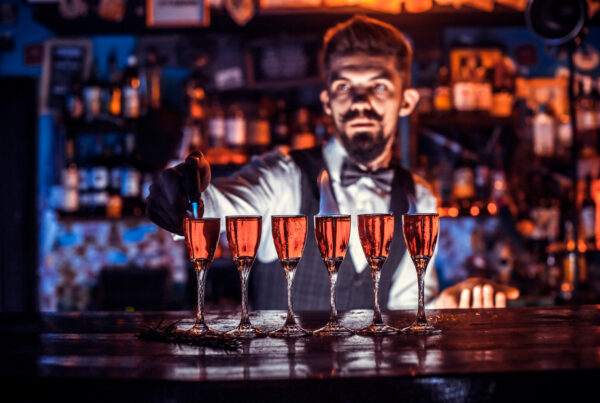
A real bar with a back bar behind it makes a cash bar run so much more smoothly. The front gives guests a place to order and pay, and the back holds bottles, mixers and the cash box out of reach. If you’re pricing out a bar rental for party use, measure the wall you’ll stand it against first.
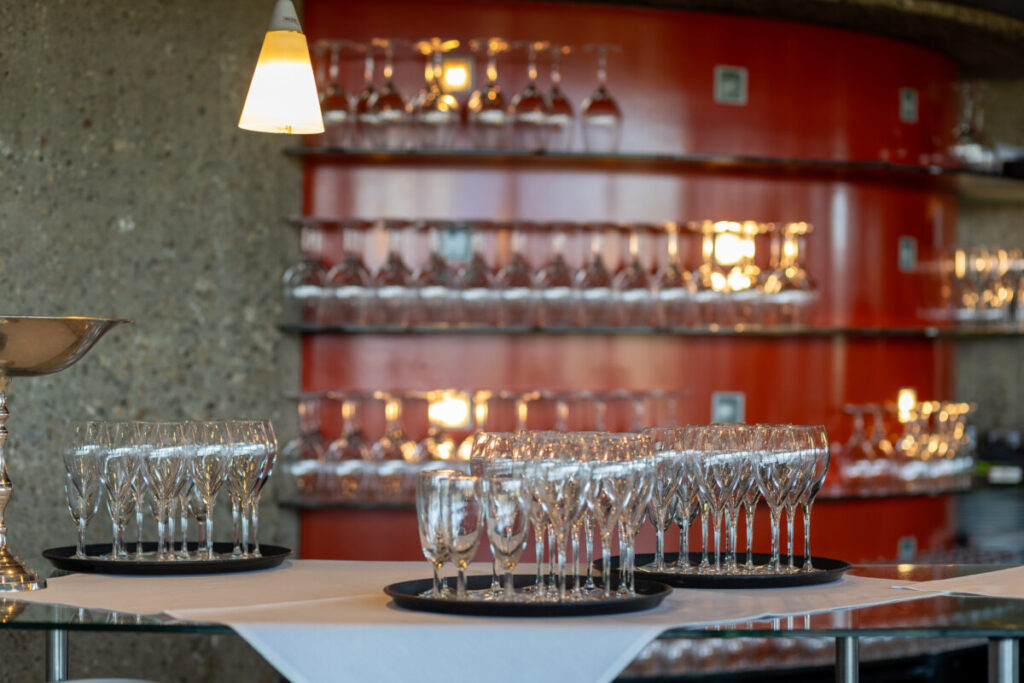
A few more things I’d add to the list:
- Stanchions to shape the line so it doesn’t block the entrance or the dance floor.
- A rental refrigerator behind the bar for white wine, beer and mixers, so nobody is digging through coolers.
- A couple of high top tables a few steps from the bar, where guests can set down a drink.
- Trash cans at both ends of the bar, not just one.
And buy more ice than you think. Our guide on how much ice for a party explains why most hosts run short around the second hour.
For city venues, ask about the freight elevator and loading rules before delivery day. A Manhattan loft building may want a certificate of insurance from any vendor bringing in a bar, and it’s much easier to sort that out a week ahead than at the curb.
Frequently Asked Questions
Do I need a liquor permit for a private party in NYC?
Generally not, if you’re giving drinks away for free to invited guests. The permit is about selling alcohol. Once guests pay for drinks, through a cash bar, tickets or anything similar, you should apply. Confirm any unusual setup with the SLA.
How far in advance do I need to apply for a one-day liquor permit in NYC?
At least 15 business days before the event. That works out to roughly three calendar weeks, longer if a holiday falls in between. Filing a month out gives you breathing room.
How much does a one-day liquor permit cost in New York?
The SLA lists the fee as $36 per point of sale per day. One bar costs $36, two bars cost $72 and three cost $108 for a single day. Check the SLA site for the current fee before you pay.
Can I sell cocktails with a one-day permit, or only beer and wine?
The one-day permit was expanded to include liquor along with beer, wine and cider, so mixed drinks are allowed under it.
Does the one-day liquor permit apply on Long Island or in New Jersey?
It’s a New York State permit, so it applies on Long Island as well as in the five boroughs. It doesn’t cover New Jersey, which has its own state rules.
Get the Paperwork In, Then Plan the Bar
File early, count your bars honestly and keep the printed permit where the bartender can reach it. Once that’s done, the fun part starts: picking the bar, figuring out where the line goes and deciding how many tables guests will gather around. If you’d like a hand working out how many bars and tables your space can hold, we’re happy to talk it through.