


The first half hour of a party is when a bar either keeps up or falls apart. Everyone shows up at once, the music goes on, and if you’ve booked too few bartenders the line stretches past the coat rack while one person pours as fast as they can. How many you need comes down mostly to what’s on the menu: beer and wine let one bartender cover a big crowd, while shaken, made-to-order cocktails call for a lot more hands.
The short answer
Start with 1 bartender per 50 guests for a full bar. Stretch that to 1 per 75-100 for beer and wine only, tighten it to 1 per 25-35 for craft cocktails, and add a barback or relief bartender if the party runs past four hours.
From there you adjust for how long the party runs and how drinks actually get into people’s hands. Here’s how I’d think it through if you were sitting across from me with your guest list.
Start With These Ratios
These are rules of thumb that caterers and bar services lean on, not hard laws. They assume most of your guests drink and the party runs about four hours.
- Beer and wine only: about 1 bartender per 75 to 100 guests
- Full bar with simple mixed drinks like a vodka soda or a rum and Coke: about 1 per 50
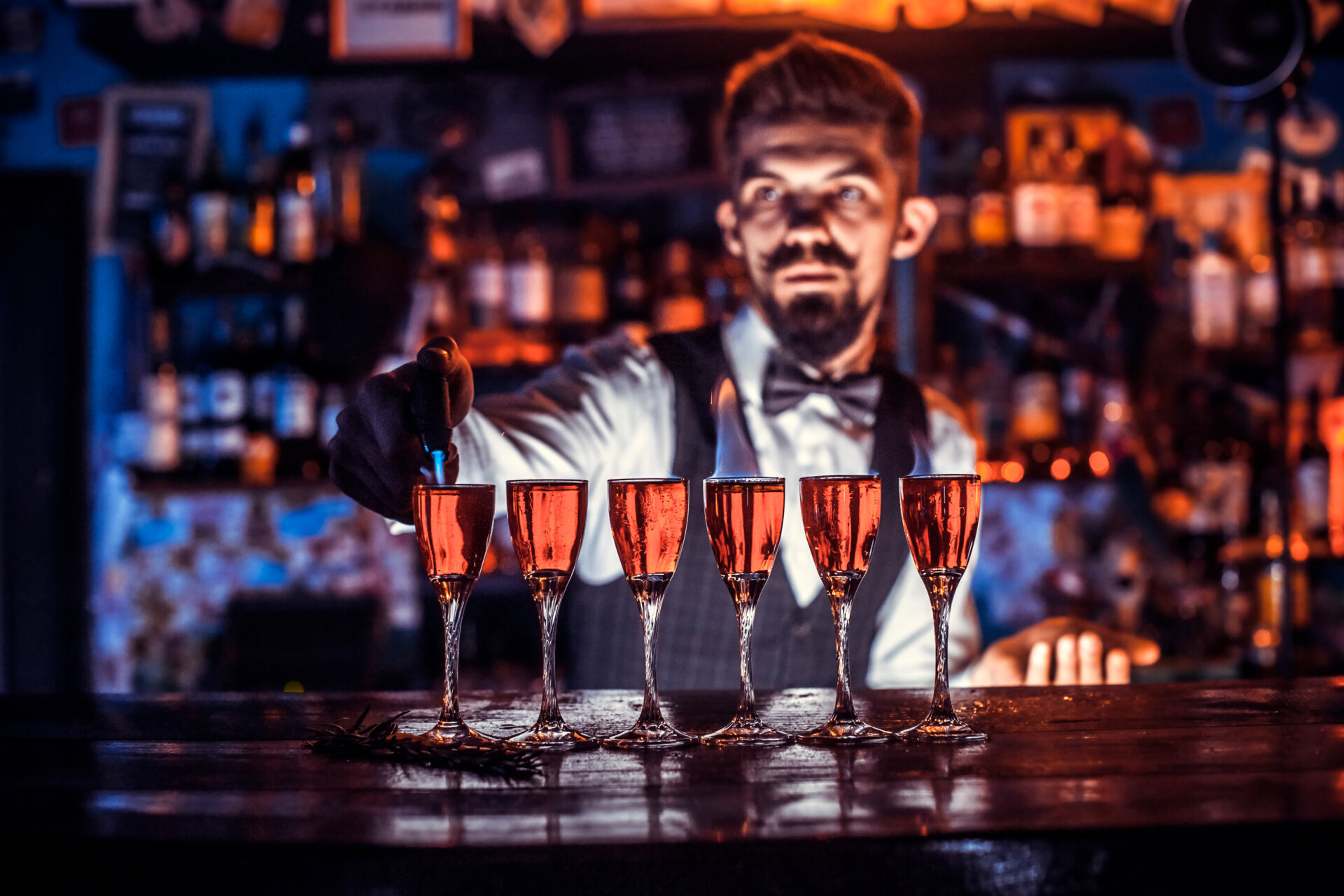
- Signature or craft cocktails that get shaken, muddled or garnished: about 1 per 25 to 35
Count only guests old enough to drink. When your number lands between two whole people, round up. A 120-guest party with a full bar works out to 2.4 bartenders, so book three, or book two and add a barback to handle ice and restocking.
If a big share of the adults won’t be drinking (an afternoon family party, a crowd that’s mostly driving home), you can lean toward the lower end.
Bartender Chart by Guest Count
Here’s what those ratios look like for common party sizes. Each range rounds up to whole people and assumes a party of about four hours.
| Guests | Beer and wine only (1 per 75-100) | Full bar (1 per 50) | Made-to-order cocktails (1 per 25-35) |
|---|---|---|---|
| 50 | 1 | 1 | 2 |
| 100 | 1-2 | 2 | 3-4 |
| 150 | 2 | 3 | 5-6 |
| 200 | 2-3 | 4 | 6-8 |
| 250 | 3-4 | 5 | 8-10 |
| 300 | 3-4 | 6 | 9-12 |
Notice how fast the cocktail column climbs. At 200 guests, a craft cocktail menu needs 6 to 8 bartenders compared with 4 for a full bar. That gap is why so many hosts serve one signature drink alongside beer and wine instead of a whole menu of made-to-order cocktails.
A batched signature drink, mixed ahead in a dispenser and poured over ice, moves almost as fast as wine. You can plan that kind of drink closer to the full bar column.
Why Cocktails Need More Hands Than Beer and Wine
The ratios differ because of speed. Opening a beer or pouring a glass of wine takes a few seconds. A shaken cocktail with fresh citrus and a garnish takes a lot longer. The real stress test is the arrival rush, when most guests walk in during the same half hour and head straight for a drink.
Say 100 guests arrive over 30 minutes, which is 1,800 seconds, and each wants one drink:
- One bartender has to serve a drink every 18 seconds. That only works if they’re mostly handing out bottled beer or pre-poured wine, which is why 100 guests per bartender is the very top of the beer and wine range.
- Two bartenders (the full bar ratio) each serve 50 drinks, or one every 36 seconds. That’s realistic for wine, beer and two-ingredient mixed drinks.
- Four bartenders (the cocktail ratio of 1 per 25) each serve 25 drinks, or one every 72 seconds, which leaves time to shake, strain and garnish.
Not everyone orders at the exact same moment, of course. But a bar that can handle that opening half hour rarely struggles later.
How Service Style Changes the Count
Open bar or cash bar
The chart assumes an open bar. A cash bar slows every order down, since each drink comes with a card tap or making change. If guests are paying, add a bartender or put a separate cashier at the end of the bar. Read the permit section below too, because charging for drinks can change what paperwork you need.
Passed drinks at arrival
Servers walking the room with trays of wine or a welcome drink soak up the rush before anyone reaches the bar. With a passed welcome drink, you can usually stay at the lower end of your bartender range for the first hour. Our guide to an elegant cocktail hour has more on timing passed drinks with appetizers.
Wine poured at the table
If servers pour wine during a seated dinner, the bar goes quiet for a while. That’s a natural break window for your bartenders, but it doesn’t reduce how many you need. The line comes right back the moment dinner ends and the music picks up.
A self-serve beer and wine station
For a casual backyard party with a smaller crowd, a stocked station with cans, bottles and an opener can stand in for a bartender. Someone still has to keep it iced and pull the empties, so ask a reliable friend or hire a helper for a few hours.
Long Parties Need Relief Bartenders
A common planning estimate is about one drink per guest per hour, with more in the first hour as people settle in. For 100 guests at a five-hour party, figure roughly two drinks each in the first hour (200 drinks) plus one per hour for the remaining four hours (400 drinks), so around 600 drinks total.
That volume doesn’t change your ratio much, but the clock does. Bartenders need breaks, and nobody pours their best after five straight hours on their feet. For events longer than four hours, add a relief bartender who can rotate people out, or a barback who keeps everyone stocked. A common setup is one barback for every two or three bartenders.
Peaks usually hit at arrival and again right after dinner, so schedule breaks away from those windows.
One Bar or Two
A single bar comfortably holds about two bartenders before they start bumping elbows. Once your count reaches three or more, think about a second bar station rather than a longer line at one. For 200 guests with a full bar, that means four bartenders split across two bars, two at each.
Keep the bars apart from each other and away from the entrance, so the arrival crowd doesn’t stall in the doorway. Bars at opposite ends of a room also draw people into the whole space. If you’re sketching the floor plan now, our piece on arranging tables and chairs for guest flow shows where traffic tends to jam.
The space itself can limit how big a bar you bring. In a Tribeca loft, measure the freight elevator before you settle on bar sizes. On a Suffolk County lawn, a backyard bar needs level ground, and bartenders standing in direct sun all afternoon will thank you for some shade. Our outdoor party rental checklist covers the rest of a backyard setup.
What Your Bartenders Need Behind the Bar
Even the right number of bartenders slow down if they don’t have room to work. Here’s what I’d set up:
- A front bar for serving plus a back bar behind it for bottles, backup glasses and ice. You can see options on our bar rentals for parties page.
- A refrigerator or a one door freezer close by for backup ice, white wine and beer, so nobody runs to the kitchen mid-rush.
- A trash can behind the bar and another out front for guests’ empties.
- A few high top cocktail tables a short walk from the bar, so people step away to chat instead of lingering at the counter.
Glassware, ice and the drinks themselves usually come through your caterer or bar service. If you’re piecing together the rest of the food and drink setup, our guide to planning party catering equipment covers fridges, warmers and power.
Setup time matters as much as the gear. A bar that’s fully stocked before guests walk in starts the night ahead instead of catching up.
Pro tip
Ask your bartenders to arrive about an hour before doors open so the ice is loaded, garnishes are cut and a tray of wine is already poured. Those first glasses buy you the opening minutes of the rush, which is exactly when a short-staffed bar falls behind.
Permits Depend on Who Is Pouring
If you hire a licensed caterer or bartending service, or your venue holds its own liquor license, the alcohol side is generally handled under their license. Ask them to confirm that in writing.
If your event isn’t covered that way, especially if guests pay for drinks or tickets, you may need a permit from the New York State Liquor Authority. According to the SLA’s online permits page, a One-Day Alcohol Event Permit covers serving beer, wine, cider and liquor for 24 hours, has to be filed at least 15 business days before the event, and carries a fee for each point of sale. That last detail ties back to your bar plan, since two bar stations can mean two points of sale.
Thinking about a gathering in a Queens park or on a city street? Expect the city to be involved, not only the state. As one example, the SLA’s page on one-day permits for World Cup events explains that those events on NYC municipal property go through the city’s Street Activity Permit Office, and that World Cup permits come with their own advance-notice and security-plan requirements. Your party won’t fall under that World Cup program, but it’s a useful reminder that public property usually brings the city into the picture. Confirm exactly what applies to your event with the SLA and the city before you lock anything in.
Questions We Hear a Lot
How many guests can one bartender serve?
About 50 at a full bar, 75 to 100 if it’s only beer and wine, and 25 to 35 if they’re making cocktails to order. A barback handling ice and restocking helps one bartender keep pace at the top of those ranges.
How many bartenders do I need for 100 guests?
Two for a full bar. For beer and wine only, one can work if you add a barback or pre-pour wine at arrival, though two is more comfortable. A craft cocktail menu needs three or four.
How many bartenders per guest for beer and wine?
Roughly one per 75 to 100 guests. Beer and wine are the fastest drinks to serve, which is why the ratio stretches so far. Stay closer to 75 if the arrival rush will be tight or the party runs long.
Do I need a barback for a small party?
Under about 75 guests and four hours, usually not. Beyond that, or for any party that runs past four hours, a barback keeps your bartenders pouring instead of hauling ice.
How many bars should I set up for 200 guests?
For a full bar, two bars with two bartenders each. For beer and wine, a single bar with two bartenders can manage, but if you go up to three, two smaller stations usually flow better than one crowded counter.
Go Enjoy Your Own Party
Once you’ve counted your drinking guests, picked a service style and matched bartenders to bars, the hard part is done. Put the bars where people can find them, give your bartenders room behind the counter, and then go get yourself a drink. If you’d like a hand figuring out how many bars and back bars fit your space, our family-run team in Brooklyn has been setting up parties for more than 25 years and is happy to talk it through.