


Halfway through a summer graduation party, someone lifts the cooler lid and finds a few cans floating in lukewarm water, and a cousin gets sent out to hunt for bags of ice. That usually happens because the host bought ice for the glasses and forgot everything else that eats it: the coolers, the food display and the heat. Count those separately, add a cushion, and you’ll buy the right amount the first time.
The short answer
Plan about 1 lb of ice per guest for drinks at a party of around four hours, and closer to 2 lb per guest if it’s hot, outdoors or cocktail-heavy. Then add separate ice for chilling bottles and cans (roughly 10-12 lb per case of 24) and about 20% extra for melt and spills.
Glass Ice and Chilling Ice Are Two Different Orders
The ice that goes into cups has one job: sit in a drink. It needs to be clean, bagged cube ice that stays sealed or in a covered bin until a scoop pulls it out. The ice packed around beer, soda, water and wine bottles has a different job, and it gets handled constantly. Wet hands reach in, bottoms of cans that sat on the floor get pushed down into it, and by the end of the night it’s mostly water.
Keep those two supplies apart from the start. Ice that’s been sitting around cans and bottles never goes into a glass. Once you accept that rule, it becomes obvious why one combined estimate always comes up short: you’re really buying for two (sometimes three) separate uses.
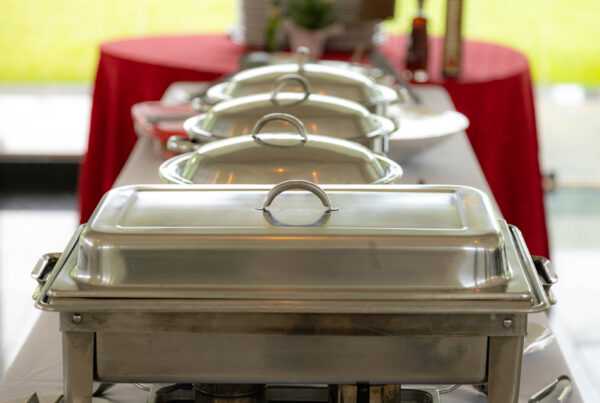
The third, smaller use is food. If you’re putting out shrimp, cut fruit, salads or anything else perishable on a bed of ice, that’s its own pile too, and it follows food safety rules rather than drink math.
Starting Numbers for 50, 75 and 200 Guests
For drinking ice, the common starting rule is 1 to 2 lb per guest, which matches the range in this drink-by-drink breakdown. I use the low end for an indoor party of about four hours in mild weather, and the high end for heat, outdoor setups or a bar pouring mostly mixed drinks. Then I add 20% on top, because some always melts in the bag and some always ends up on the floor.
Here’s how much ice to buy for a party of 50:
- Mild, indoors, about four hours: 50 lb, plus 20%, so about 60 lb
- Hot, outdoors or cocktail-heavy: 100 lb, plus 20%, so about 120 lb
For a party of 75:
- Mild: 75 lb, plus 20%, so about 90 lb
- Hot or cocktail-heavy: 150 lb, plus 20%, so about 180 lb
And for a party of 200:
- Mild: 200 lb, plus 20%, so about 240 lb
- Hot or cocktail-heavy: 400 lb, plus 20%, so about 480 lb
Party ice usually comes in 7, 10 or 20 lb bags. That makes 60 lb six 10-lb bags or three 20-lb bags, 90 lb four 20-lb bags plus one 10-lb bag, and 240 lb twelve 20-lb bags. Remember these numbers cover glasses only. Chilling ice comes next.
How the Hours, the Heat and the Menu Change the Math
Longer parties
The 1 lb baseline assumes roughly four hours, which works out to about 0.25 lb per guest per hour. That gives you an easy way to scale. A six-hour wedding for 200 guests in mild weather needs about 200 x 0.25 x 6 = 300 lb of glass ice, or about 360 lb with the 20% cushion. On a hot day, double the hourly rate to 0.5 lb per guest.
Hot days and outdoor setups
Picture a Suffolk County backyard in July with the bar facing west. Ice in an open bin in direct sun goes fast, and guests reach for refills more often because their drinks warm up between sips. That’s where the 2 lb figure earns its keep. Put the bar, the coolers and the bulk ice in shade, keep lids closed between scoops, and you’ll stretch whatever you bought. Our outdoor party rental checklist covers shade and layout in more detail.
What’s being poured
Beer and wine barely touch glass ice; they need chilling ice instead. Soda, iced tea and lemonade use a moderate amount. Cocktails are the hungry ones. A shaken drink uses ice in the shaker, gets strained, and then goes over fresh ice in the glass, so it can use about twice what a soda does. Frozen drinks blended to order use even more. If your menu leans on mixed drinks, plan at the top of the range, and check that you’ve staffed the bar to match by reading up on how many bartenders per guest you need.
Checking Your Estimate Against the Drink Count
If you want a second opinion on the per-guest number, count drinks instead. A widely used planning rule is about one drink per guest per hour, often a little more in the first hour when everyone arrives thirsty.
Take a mild, four-hour party for 75. That’s about 75 x 4 = 300 drinks. The 75 lb baseline spread over 300 drinks is 0.25 lb per drink, or 4 oz, which is a glass with a few cubes in it. A 12-ounce cup packed to the rim with ice holds closer to half a pound. So if your bartender fills every glass full, your ice use per drink roughly doubles, and you land at the 2 lb per guest figure. That’s the real reason the range is so wide: it comes down to how full each glass gets and how much melts in the bin before it’s ever scooped.
Chilling Ice for Coolers and Tubs
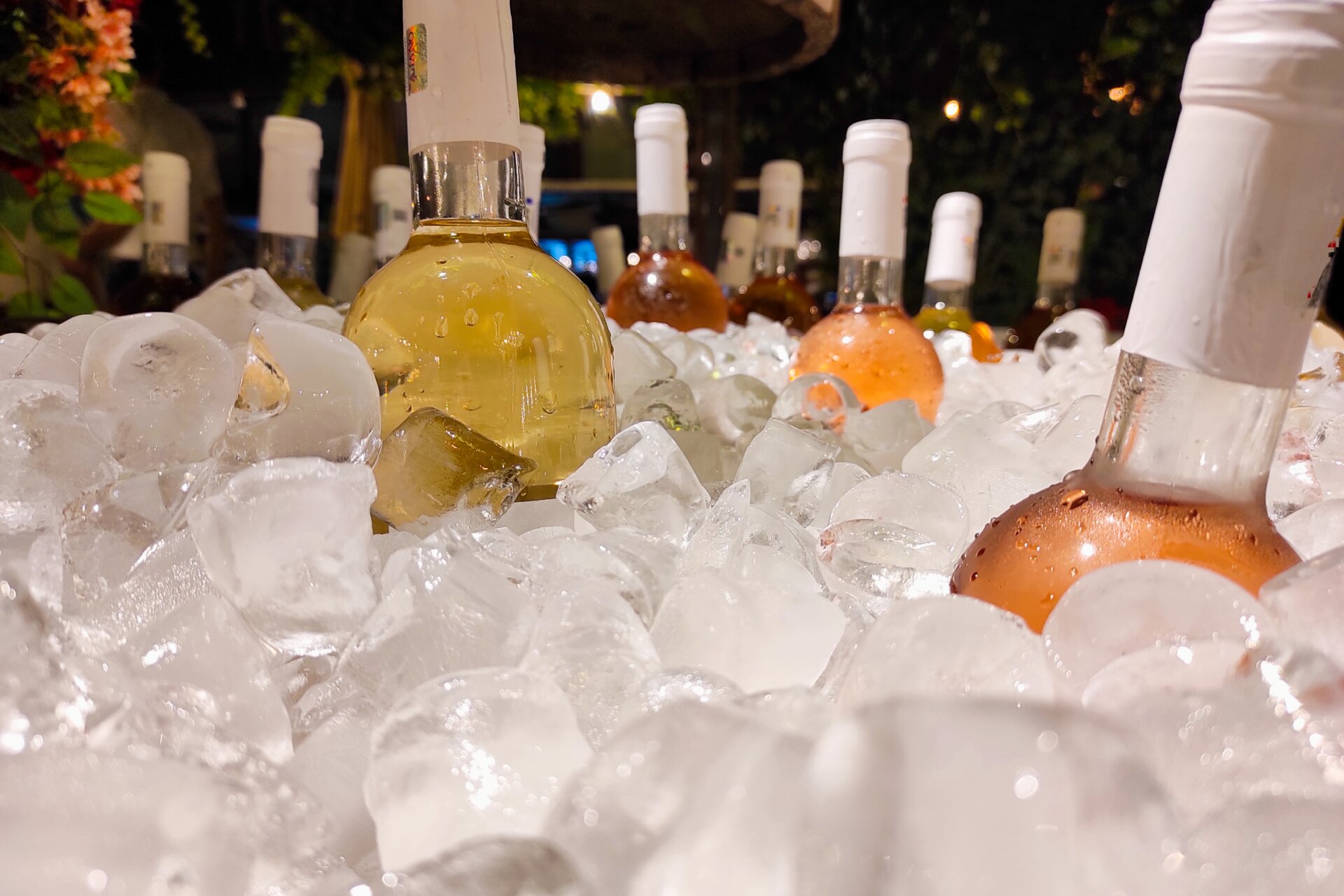
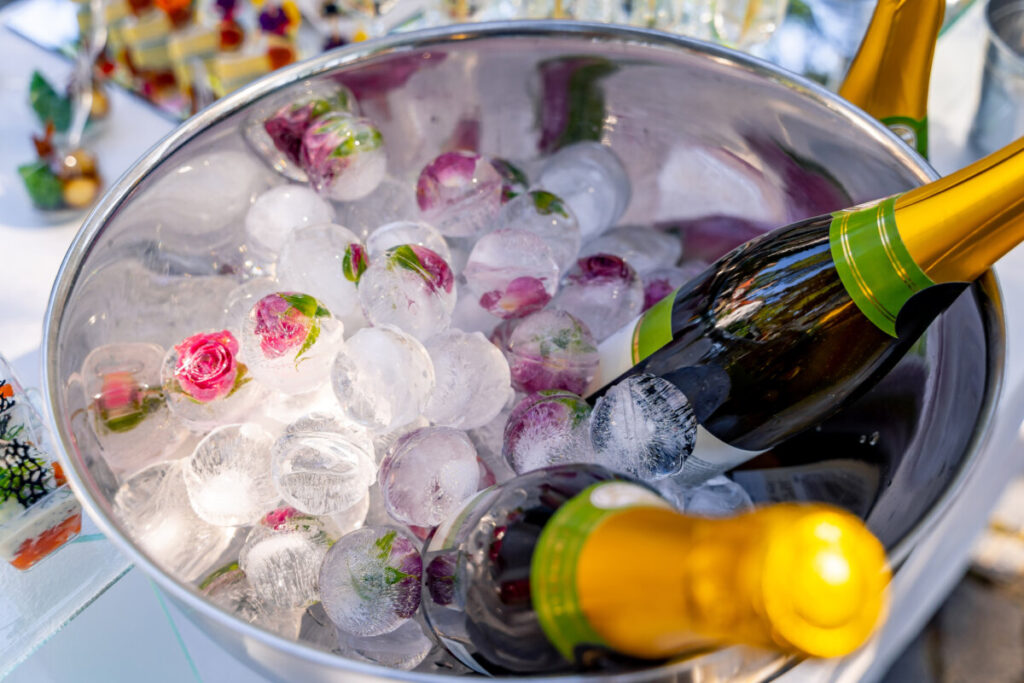
For tubs of bottles and cans, a workable ballpark is 10-12 lb of ice per case of 24. Bury the drinks in layers rather than dumping ice on top, and once they’re packed, pour in a little cold water. An ice-water bath touches every side of every can, so drinks chill faster than they do in dry ice cubes alone.
To put it together, say that party of 75 is serving six cases of beer, soda and water. Chilling ice runs about 60-72 lb. Add the 90 lb of glass ice and you’re at roughly 150-160 lb total, or eight 20-lb bags. That’s a long way from the 75 lb many hosts would guess.
Wine needs less than you’d think if it starts out cold. Reds generally don’t need ice at all, while whites and sparkling only need a tub to keep them cool after a refrigerator has done the real chilling.
Ice Under Food Has a Different Job
Ice beneath a seafood platter or a salad bar is a food safety tool. The FDA’s guidance on handling food safely outdoors says cold food should stay at 40 °F or below, and perishable food shouldn’t sit out more than 2 hours, or 1 hour when it’s above 90 °F. The same guidance recommends draining melt water and replacing ice often.
In practice, nest a pan of food inside a larger pan of ice rather than setting food directly on the ice, and plan to swap the ice out at least once during a long display. A full-size pan bedded in ice can use a 10-lb bag by itself. If you’re sorting out pan sizes for the whole menu, our guide to half pan sizes helps you count how many you’ll be icing down.
Where the Ice Waits Until It’s Needed
Buying the right amount does nothing if half of it melts in a hallway. A bag of ice sitting at room temperature starts losing weight within the hour, and in summer it goes faster. The best fix is cold storage on site. A rented one door freezer can hold backup bags until the bar needs them, and a refrigerator for mixers, garnishes and white wine means less ice spent on chilling. This is one of the items people forget when they plan party catering equipment, and it matters most when the venue is a community room in the Bronx or a rented loft with a kitchen fridge already full of the caterer’s food.
Behind the bar, keep coolers of bulk ice tucked under or behind the counter so the bartender can refill the scoop bin without walking away. A bar rental with a back bar gives you a place to hide those coolers and keep the area tidy.
Then there’s carrying it. A few hundred pounds of ice is heavy, wet and slippery. For a Brooklyn brownstone with a fourth-floor walk-up, 10-lb bags are far easier on the stairs than 20-lb bags, even if it means more trips. In elevator buildings, ask the super whether you need to reserve the freight elevator and pad the floor, since dripping bags in a lobby tend to annoy building staff.
Ice that's been sitting around cans and bottles never goes into a glass.
Questions to Settle With the Venue First
A few answers from the venue or caterer can change your order a lot:
- Is there an ice machine on site, and are you allowed to use it?
- Does the caterer bring ice for the food, the bar or neither?
- Is there freezer space you can use, and how much?
- Where can a delivery truck stop, and for how long?
- Is there a floor drain or sink nearby for dumping melt water at the end of the night?
Timing the Buy and the Restock
Unless you have freezer space, buy ice the day of the party, as close to setup as you can manage. For bigger events, split the order. Have the first half on hand at setup and a second run or delivery about halfway through, so you’re not storing 400 lb of melting ice from the start. Assign one person to check the tubs and food displays each hour, drain water and top them off. That small habit does more to keep drinks cold than any number on a chart.
Buy the Extra Bag
If you’re stuck between two numbers, go with the higher one. Leftover ice melts in the grass and costs you a few dollars. Running out means warm drinks and someone missing half the party on an errand. Get your storage and bar layout sorted early, and the ice math gets a lot easier. If you’d like help working out freezers, bars and back bars for your space, we’re happy to talk it through.