


The most common mistake when renting outdoor heaters is booking one or two for the whole yard and assuming the warmth will spread. It won’t. Plan on roughly one full-size patio heater for every 150 to 200 square feet where guests will actually stand or sit, spread them among the guests instead of lining a fence, and keep every one of them well clear of walls, awnings and exits.
Heat from a patio heater falls off fast. Stand close and you’re toasty. Ten feet away, the heater is mostly decorative. So the job comes down to arithmetic and placement, with some fire code mixed in. Here’s how to handle all of it for a party anywhere around New York City, Long Island or New Jersey.
What Kind of Heater You’re Actually Renting
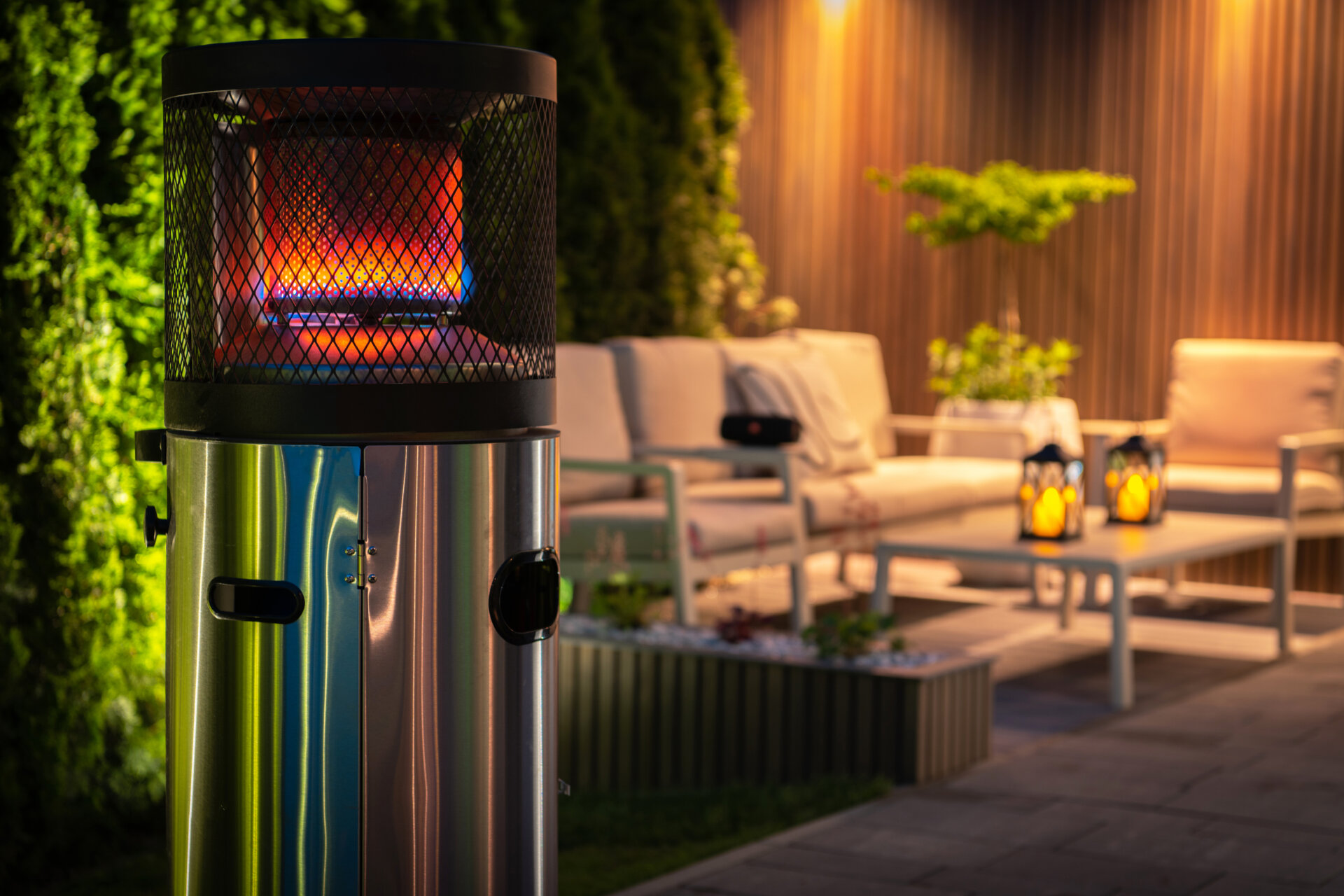
Most outdoor heaters for rent fall into two camps. The tall freestanding propane heater, the mushroom-top or glass-tube style you’ve seen on restaurant patios, warms a circle around its post. Electric infrared heaters, on stands or mounted, warm the people and surfaces in front of them rather than the air, and they need power. Small tabletop propane units exist too, but they warm one table at best and aren’t what you build a party around.
For a backyard, terrace or rooftop party, the tall propane heater is the workhorse. Before you reserve a row of them, weigh it honestly.
Pros
- No cords, outlets or circuit math, so they can go anywhere on a firm, level surface
- Warmth radiates in a full circle, which suits a crowd mingling around them
- Guests understand them instantly and gather around without being told
Cons
- Open flame brings fire rules, and in New York City a permit is generally required for events
- They need generous clearance from buildings, awnings and anything overhead that can burn
- Wind blows the heat sideways and can make a tall heater unstable
- Fuel runs out, and someone has to watch the tanks on a long night
Electric infrared units flip most of those trade-offs. No flame, no tanks, and they can work in spots where a fueled heater isn’t welcome, like a covered porch. The catch is power: you need outlets on circuits that can carry the load, and each unit warms a narrower zone, so you’ll usually need more of them for the same space.
Ask what types of portable heaters are available for your date before you settle on a layout, since the type changes the count.
The Square-Footage Math
A full-size patio heater throws comfortable warmth roughly 7 to 8 feet out in every direction. That’s a circle about 15 feet across, which works out to around 175 square feet (3.14 x 7.5 x 7.5 is about 177). That’s where the 150 to 200 square foot rule of thumb comes from. Use 200 on a mild, still evening. Use 150 when it’s raw or breezy, because wind shrinks that warm circle.
Measure only the area guests will occupy: the table zone, the bar, the lounge corner. Not the whole lot, and not the garden beds. If you haven’t sized the footprint yet, our guide to how much space per guest your party needs will get you there first.
Say the occupied area is 30 by 40 feet. That’s 1,200 square feet. Divide by 200 and you get 6 heaters for a calm night; divide by 150 and you get 8 for a cold, windy one. Always round up. A fraction of a heater keeps nobody warm.
| Occupied area | Square feet | Mild, still night (1 per 200 sq ft) | Cold or breezy night (1 per 150 sq ft) |
|---|---|---|---|
| 20 x 20 ft | 400 | 2 | 3 |
| 20 x 30 ft | 600 | 3 | 4 |
| 30 x 30 ft | 900 | 5 | 6 |
| 30 x 40 ft | 1,200 | 6 | 8 |
| 40 x 60 ft | 2,400 | 12 | 16 |
The 30 x 30 row shows the rounding at work: 900 divided by 200 is 4.5, so you book 5, and 900 divided by 150 is exactly 6.
Seated guests run colder than standing ones
A cocktail crowd moves. People drift toward the heat, grab a drink, keep their blood flowing. A seated dinner pins everyone to one spot for an hour or more, so a guest at the far end of a table can’t wander over to warm up. For any seated meal, lean toward the 150 figure even on a so-so night. Open sky versus a partially covered space matters too: an enclosed patio holds warmth better than a wide-open lawn with wind coming across it.
Where the Heaters Go
Spread them through the crowd in a loose, staggered grid. Heaters lined along the fence warm the fence, and the neighbors’ side of it.
- At a seated dinner, set heaters between table clusters so no chair sits more than about 7 feet from one. That matches the warm radius above. Don’t jam chairs against the base; follow the manufacturer’s clearance around and above the head of the heater.
- Put one near the bar. People linger there, and if you’ve booked a bar rental for your party, the bartender is standing in one spot for hours. Keep the heater close enough to help, not so close that someone backs into it.
- When there’s a steady breeze, set heaters on the upwind side of the guests so the heat drifts toward them instead of away.
- Keep every walkway and route to an exit clear. A heater in the path to the gate or back door is a problem, both for safety and under the rules covered below.
Then think about people, not just square feet. The relatives who run cold, guests in light dresses, anyone who’ll be seated longest: give them the seats nearest the heat. It costs nothing and earns real gratitude.
Pro tip
Once the heaters are placed and lit, sit in the chair farthest from any of them for five minutes before guests arrive. If you’re reaching for your coat, so will they. Moving one heater a few feet is easy at 5 p.m. and awkward at 8 p.m. with a full table around it.
Fire Rules in the City and the Suburbs
Fueled heaters are open flame, and the rules reflect that. The FDNY’s G-93 Certificate of Fitness study materials say portable heaters belong outdoors, at least 5 feet from buildings, combustible overhangs, awnings and exits, set on firm, level, noncombustible surfaces, and not used in rain or high wind. That 5-foot buffer eats into a narrow terrace or a small yard fast, so measure before you commit to a count.
For events in the five boroughs, using propane or natural gas heaters generally requires an FDNY portable fueled space heater permit. The process involves a letter of request, proof of liability insurance and a site inspection with a sample heater present. That’s not a same-week errand. Give yourself several weeks, and check the current process with the FDNY itself, since the details can change. The city’s Buildings Bulletin 2020-018 also points hosts toward working out the number of heaters ahead of time, following manufacturer clearances from combustibles, and keeping any electric heaters used inside a tent at the recommended distances from combustible materials.
Hosting a heated street party? That brings its own permit process, covered in our piece on NYC block party permits.
Outside the city, each town or village on Long Island and in New Jersey sets its own approach to fueled heaters. Call the local fire marshal or building department, and check with your venue or HOA, which may be stricter than the town. In a backyard, the practical issue is usually the ground. A soft, sloping lawn is where tall heaters wobble, so look for a patio, pavers or a stretch of driveway that’s flat and firm.
Keeping Cold Guests Comfortable Beyond the Heaters
Heaters do the heavy lifting, but a cold-weather party works best when the rest of the setup pitches in.
Coats are the first issue. Guests arrive bundled up and then don’t know where to put anything, so the coats end up piled on chairs you needed for seating. A coat rack or a simple coat check near the entrance fixes that, and lets people grab a layer back when the night cools.
Warm food and drink help more than people expect. A hot water urn turns into a cocoa, tea or cider station with almost no effort, and an oven warmer keeps trays hot between the kitchen and the table instead of letting dinner go lukewarm in the night air. Floor-length tablecloths also block a surprising amount of draft around guests’ legs at a seated meal.
A few things are on you rather than any rental company: tell guests on the invitation that the party is outdoors, and keep a basket of throws near the coldest corner. Our outdoor party rental checklist covers the rest of the gear an open-air event tends to need.
Booking Before the Cold Snap Hits
Fall and early-winter weekends fill up, and so does heater inventory, because everyone checks the forecast the same Tuesday. Reserve once your guest count and layout are roughly settled. You can usually adjust the quantity later, but you can’t conjure heaters that are already out on someone else’s patio.
When you call, have the measurements of the occupied area, the date and hours, and the delivery details ready. Delivery access matters with tall equipment: in the city, think elevators, stairs and loading rules, plus whether your building even allows fueled heaters on its roof or terrace. Out in the suburbs, it’s gate widths, steep driveways and how far the truck can get from the yard. Ask who supplies fuel and who handles swapping tanks during a long event.
Heads-up
Don’t park a propane heater under a patio umbrella, a fabric-wrapped pergola, a low tree branch or next to draped fabric. Those all count as combustible overhangs or materials, and the 5-foot clearance applies to them too. If the plan only works with a heater under the umbrella, the plan needs another look.
Finally, have a weather call in mind. Heaters don’t fix rain or strong wind, and the FDNY guidance says not to run them in either. Know where the party moves, or what changes, if the forecast turns.
Quick Answers
How much does it cost to rent an outdoor heater?
It depends on the heater type, how many you need, the rental length, whether fuel is included and how far the delivery goes. Any number in a blog post would be out of date by the time you read it, so send your date, location and heater count for a real quote, and ask what’s included in it.
Where can I rent an outdoor heater for my party?
A full-service party rental company that delivers, sets up and picks up is the easiest route, since tall heaters are awkward to transport yourself. B&B Party Rentals rents portable heaters alongside tables, chairs and linens across the New York area, so the whole order arrives on one truck.
Should I rent outdoor heaters for a wedding?
For any evening wedding outside summer, yes. Plan the count around the dinner, not cocktail hour, since seated guests feel the cold sooner. Use the 150 square foot figure for the dining area and seat older guests nearest the heat.
How far should a patio heater be from guests?
Close enough to feel it, which means within about 7 feet, but never with chairs touching the base. Follow the manufacturer’s clearances, and keep heaters at least 5 feet from buildings, awnings and exits.
Do I need a permit for propane heaters at an event in NYC?
Generally, yes. The FDNY requires a permit for portable fueled space heaters at events, which includes an inspection. Reach out to the FDNY well ahead of your date to see what the process currently involves.
Measure the Space, Then Make the Call
Get the footprint, pick 150 or 200 based on the likely weather, round up, and spread the heaters where people will actually sit and stand. That’s most of the work. When you have your numbers, send them to B&B Party Rentals and we’ll help you match heaters, tables and seating to the space. Stay warm out there.