


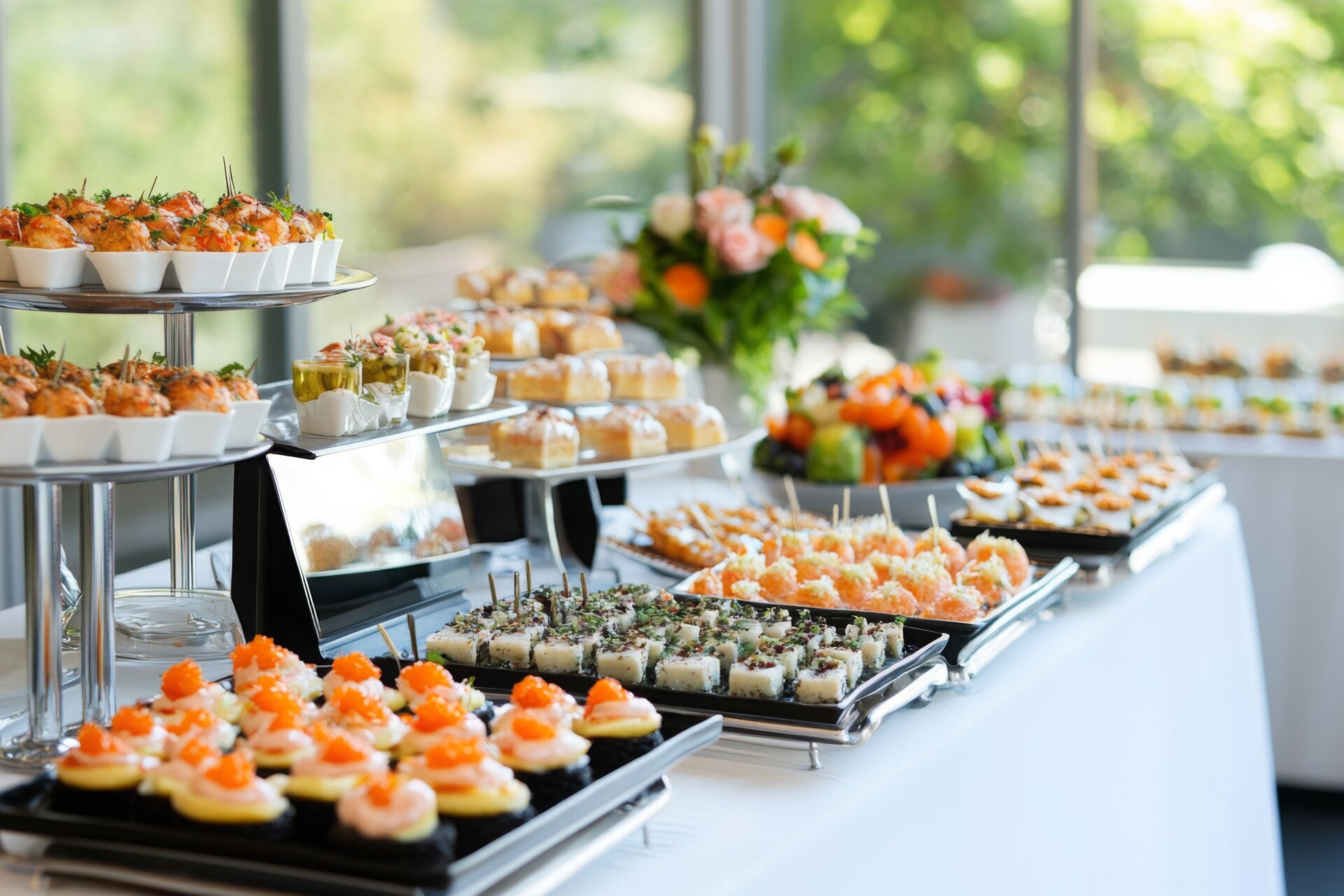
The most dependable way to set up a buffet follows the order in which a guest builds a plate: plates at the head of the table, salads and cold dishes next, the mains and hot sides after that, and cutlery and napkins waiting at the very end. Get that sequence right and the rest of the buffet table setup falls into place around it, from how far the table runs to where the bread basket sits. What follows is the rest of the picture, including how much table a menu really needs and how to keep the spread looking as good at nine o’clock as it did at six.
The short answer
Give each chafing dish about 30 inches of table and each cold bowl or platter about 20, plus roughly 18 inches at each end for plates and cutlery. A six-dish menu fits on two 8-foot tables end to end, and a single-sided line is comfortable for about 50 guests before it’s worth going double-sided.
Measure the Menu, Then Count the Tables
Most buffets are planned backward. Someone books two tables, and the menu gets squeezed onto whatever space appears. Start with the food instead.
A full-size rectangular chafing dish is roughly two feet long. With a few inches on either side for a spoon to rest and a hand to reach in, it claims about 30 inches of table. A salad bowl, bread basket or cold platter needs closer to 20. Then add about 18 inches at the head of the line for the plate stack and another 18 at the tail for cutlery and napkins.
Here’s how that plays out. Three hot dishes (90 inches) plus three cold ones (60 inches) plus both ends (36 inches) comes to 186 inches, or 15 1/2 feet. Two 8-foot tables give you 192 inches, so they hold it with 6 inches to spare. A bigger spread of five hot and four cold dishes adds up to 150 + 80 + 36 = 266 inches, about 22 feet, which calls for three 8-foot tables (288 inches). That’s why most party buffets settle on two or three banquet tables. Six-foot tables work too; they just mean an extra seam under the cloth.
Depth matters as much as length. A standard 8-foot banquet table is 30 inches deep, enough for a chafing dish in the middle with a ledge in front where a guest can rest a plate while serving. And remember the buffet tables come on top of your dining tables; our guide to round table sizes for every guest count covers the seating side of the room.
Where the Buffet Sits in the Room
The classic buffet layout runs single-sided along a wall, which keeps cords and backup pans tucked out of sight and works well for roughly 50 guests. Past that point, pull the table into the room and run it double-sided: food down the center, plate stacks at both corners of the starting end, two lines moving at once. A very large crowd may be better served by two separate stations with identical menus.
Leave about 4 feet of open floor in front of the table so the line doesn’t spill into a doorway or the path to the restrooms. Keep drinks and dessert on their own tables, well apart, since nothing stalls a line like a guest balancing a full plate while pouring lemonade. A few high tops near the end of the buffet give early eaters a place to set down a plate, and our piece on cocktail table heights explains which size suits standing guests. For the wider floor plan, see arranging tables and chairs for guest flow.
Pro tip
The night before, set every empty serving dish on the table in order and tuck a sticky note into each one naming the food and its serving utensil. Caterers do this routinely, and it shows at a glance whether the lasagna pan actually fits where you pictured it.
Setting Up a Buffet Table From Beginning to End
The sequence below assumes the tables have arrived and the food is still in the kitchen. Food is always the last thing to go out, so everything else can be finished well before guests ring the bell.
Think of it as dressing a stage: structure first, then fabric, then props, then the performers.
- Place and level the tables. Lock the legs, push the ends tight together and press down on each corner to check for wobble. On a Long Island lawn or a sloping New Jersey patio, shim the low legs or move the line to the flattest ground, and keep it out of the afternoon sun if you can. A chafing dish full of hot water is no place for a tilt.
- Dress the tables. A floor-length cloth hides cases of soda and spare fuel underneath. For an 8-foot banquet table, a 90 by 156 inch cloth reaches the floor all the way around. The table is 30 inches deep and stands about 30 inches tall, so the width works out to 30 + 30 + 30 = 90, while the 96-inch length gains 30 inches at either end for a total of 156. Two tables in a row can take two cloths overlapped at the join, with a runner laid over the seam. Our rental linens come in the standard banquet sizes.
- Build height before the food arrives. Sturdy boxes or overturned crates along the back edge, draped with fabric, lift bread baskets and platters so guests can see every dish from the front of the line. Tiered display shelves suit a dessert end.
- Lay out the empty dishes in eating order: salads and cold sides first, then mains, then hot sides and bread, with each sauce beside the dish it belongs to. Many caterers put the priciest protein later in the line, after plates have already filled with sides.
- Set up the chafing dishes. Pour an inch or so of hot water into each water pan and light the fuel before the food goes in, so the heat is already there. Some venues and buildings restrict open flames, so ask before you plan on canned fuel.
- Stack plates at the start, about 20 at a time, with a reserve hidden under the cloth. Put cutlery and napkins at the end, ideally rolled together, so nobody juggles a fork while serving.
- Add a serving utensil to every dish with a small spoon rest beside it, then label each dish, flagging common allergens such as nuts and shellfish.
- Bring out the food. Hot dishes go straight from the oven into heated chafers; cold dishes go out on ice.
Keeping Hot Food Hot and Cold Food Cold
The FDA’s guide to serving safe buffets advises keeping hot dishes at a minimum of 140°F and cold ones at 40°F or below, setting cold dishes over ice, and holding backup dishes in the refrigerator or a low oven for guests who arrive late. That last point quietly shapes the whole presentation: smaller dishes, swapped often, instead of one heroic platter that sits out all evening.
The Minnesota Department of Health’s advice on keeping food safe during buffets says much the same, suggesting cold dishes nest in bowls of ice and that fresh trays come out of the refrigerator to replace, not top up, the ones on the table. A shallow bowl of shrimp set into crushed ice looks lovely, too.
For a party in Brooklyn, there’s a city-specific wrinkle. The health department’s fact sheet on temperature control notes that self-service buffets can’t use the time-only holding option, so plan on heat and ice doing the work rather than a clock. Rules for licensed caterers and venues can differ, so confirm the details with the agency.
The equipment follows from there. B&B rents chafing dishes, an oven warmer for staging backup pans, refrigerators and freezers for a crowded apartment kitchen, and urns that keep water hot through the evening. If you’re hosting in a Park Slope brownstone with older wiring, find out which outlets share a circuit before you plug in the warmer and the urn side by side.
Styling the Spread So It Looks Generous
A buffet looks abundant because of height and a steady refill rhythm, not sheer size. Two small platters kept full read as more generous than one vast tray that’s half empty by eight o’clock.
Alternate pale and colorful dishes so the potatoes, rice and roast chicken don’t blur into a single beige band, and finish each with a garnish that matches what’s in it: dill on the salmon, parsley on the potatoes. Keep flowers low and at the ends of the table, away from the serving zone, where petals can’t drift into the food and stems can’t block a reaching arm.
A solid cloth lets the food carry the color; a seasonal runner over it adds atmosphere without competing. Small framed labels, all in one style, look far more considered than folded index cards.
The Ten-Minute Look Before Doors Open
Walk the line once as a guest would, plate in hand, and check the details that are easy to miss when you’ve been staring at the table all afternoon.
- Tables level, legs locked, no wobble at the seams
- Cloths straight and the join between tables covered
- Water in every chafer and fuel lit
- A utensil and a label for every dish
- Plates at the start with a reserve stack below
- Cutlery and napkins at the end
- Ice beneath the cold dishes
- Backup pans waiting in the warmer or refrigerator
- A trash can near the end of the line
- Four feet of clear floor in front of the table
That trash can matters more than people expect. Without one, used napkins end up on the buffet itself, which is the fastest way for a beautiful table to look tired.
Thanksgiving, Showers and Halloween Spreads
A Thanksgiving buffet tends to run long because of the sides. Carve the turkey in the kitchen and bring it out on a platter, keep the gravy in a warmer right beside it, and expect to need the three-table version of the math above. Pies belong on a separate dessert table so the main line keeps moving.
A bridal shower buffet is usually lighter and brunch-leaning, with more cold dishes and fewer chafers, which frees up room for styling. Quiches and pastries look charming on display shelves, and a wall panel or backdrop behind the dessert table gives guests a pretty spot for photos.
For Halloween, a black cloth and a few dramatic pieces at either end set the mood, but keep stretchy fake cobwebs well away from anything edible, since they shed fibers. If a caterer is running any of these parties, ask early what they’re bringing: a caterer’s buffet usually includes their own chafers and serving pieces, and you’ll want their menu in hand before deciding how many tables to order.
Quick Answers
How do you set up a buffet table from beginning to end?
Level the tables, add floor-length cloths, build height along the back, lay out empty dishes in eating order, heat the chafers, set plates at the start and cutlery at the end, add utensils and labels, and bring out the food last.
How long does a buffet table need to be?
It depends on the menu. Allow about 30 inches per hot dish, 20 per cold dish and roughly 3 feet total for plates and cutlery. Most party menus land on two or three 8-foot tables, or about 16 to 24 feet.
How do you set up a buffet-style table at home?
A kitchen island or sideboard can carry part of the menu, with a folding banquet table extending the line. Keep the same order, clear the counter of appliances, and give yourself a spot near the oven for backup pans.
How many guests can one buffet line serve?
As a rule of thumb, a single-sided line works for about 50 guests. Beyond that, a double-sided table or a second station keeps the wait short.
Should desserts go on the same table as the main meal?
Usually not. A separate dessert table keeps the main line moving and gives sweets their own moment later in the evening.
Set the Table and Let the Line Move
A buffet rewards a little arithmetic and a dry run, and after that it mostly runs itself while you enjoy the party. B&B Party Rentals, a family-run Brooklyn business, brings banquet tables, linens, chafing dishes and warmers to your door, puts them in place and collects them once the plates are cleared, for parties in the five boroughs, on Long Island and in New Jersey. Once your menu is settled, tell us about your buffet and we’ll help you work out the tables it needs.