


You’re throwing a party outside and want to know what happens if it rains. Here’s the answer: choose a backup space now, rent equipment that works in both places, set a hard time for making the call, and tell guests the backup before they think to ask. That’s a workable plan for a rainy outdoor party, and none of it can be done well on the morning of the party.
Most hosts’ actual rain plan is “we’ll figure it out.” That holds up right until 40 people are wedged into a kitchen built for six, balancing plates over the sink. The rest of this page is about not becoming that kitchen.
Build the Backup While the Sky Is Still Clear
Do this when you book everything else, not the week of. Once your main layout is set (our outdoor party rental checklist covers that side), run through these steps for the wet version.
- Pick the backup space. Walk it with a tape measure. Note doors, steps, outlets and anything that won’t move, like a water heater or the car someone forgot to relocate.
- Figure out how many people it holds. Use the square-footage math further down, then compare it to your guest list honestly.
- Sketch two layouts. One for the yard, one for the backup. Every rented table and chair needs a spot in both drawings.
- Ask your rental company the weather questions. How late can you change the setup location or add items? Can the crew set up in the backup space instead? What shouldn’t sit out in the rain? Our list of questions to ask your party rental provider has more.
- Set the decision time. Base it on the answers from step four, not on the moment you start feeling nervous.
- Write the guest message now. Draft the rain text while you’re calm, so on the day you just hit send.
Planning ahead for a rainy outdoor party can feel like you’re jinxing it. You’re not. A backup you never use costs you an afternoon of thinking. A backup you need and don’t have costs you the party.
The step people skip most is the second layout. “We’ll just bring everything inside” sounds fine until you discover that the tables and chairs alone fill the den before a single guest walks in, and there’s nowhere left to put the food.
Backup Spaces Compared
Every option trades something. Here’s how the usual choices stack up.
| Backup space | Works well for | Watch out for |
|---|---|---|
| Inside the house or apartment | Smaller groups, close to the kitchen and bathrooms | Your own furniture has to move, and capacity drops fast |
| Garage | Holding most of a yard setup, easy access from the driveway | Cars and shelving must be cleared, concrete runs cold, lighting is usually poor |
| Basement | Seated dinners in larger homes | Stairs for every table and chair, low ceilings, limited exits |
| Covered porch, patio or deck | Keeping the party mostly outdoors | Wind pushes rain in sideways, so the outer edge gets wet |
| Tent from a tent company | Keeping your original layout and headcount | A separate vendor, possible permits, and it has to be booked early |
| Building community room or covered roof area | Apartment hosts in the city | Building rules, advance booking, elevator time, vendor insurance paperwork |
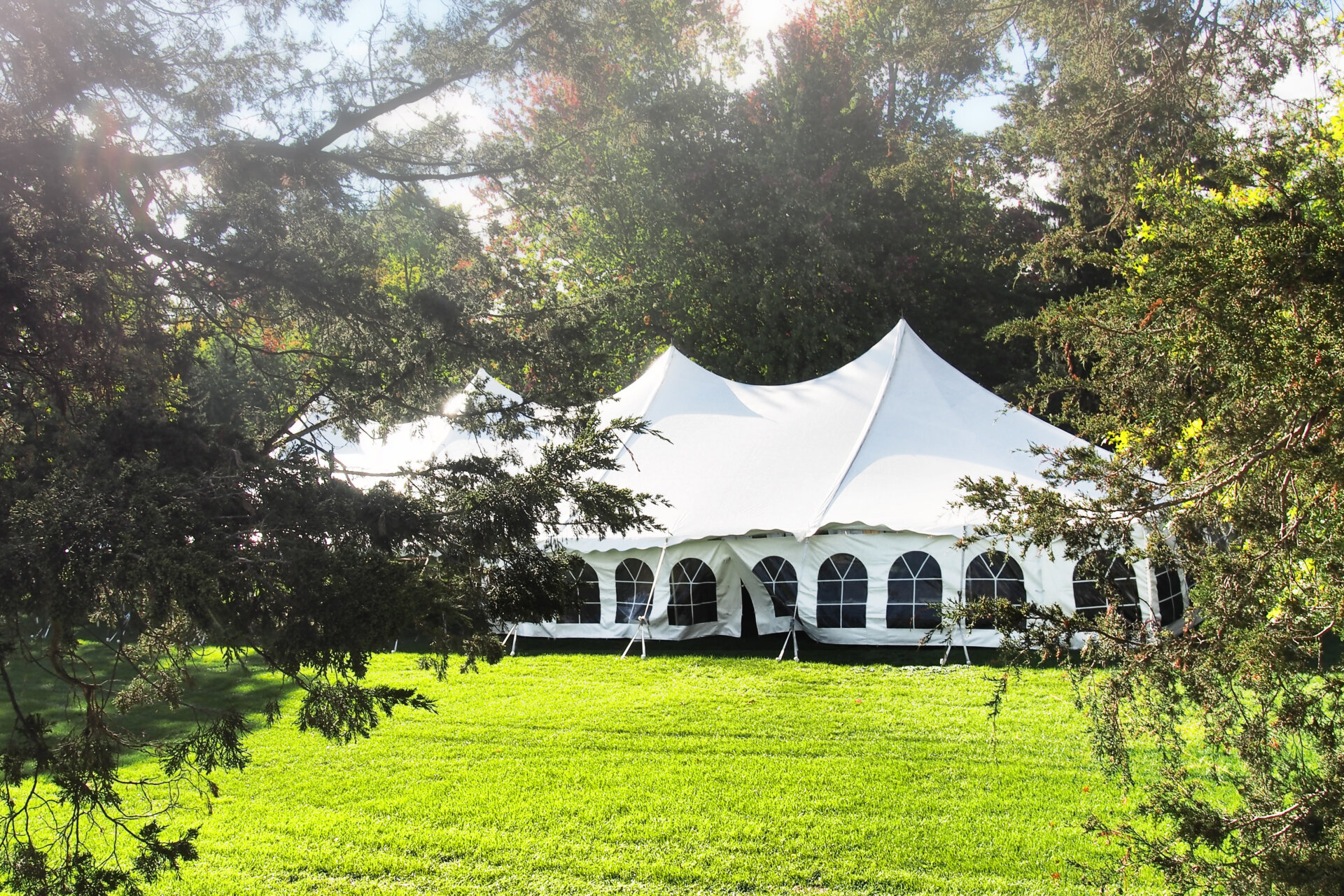
A quick word on tents, since they’re the backup that keeps the most of your original plan intact. B&B doesn’t rent tents, so if you go this route you’ll book with a tent company and have us deliver tables and chairs to go under it. In New York City, a tent generally needs a Department of Buildings permit if it’s over 400 gross square feet or stays up 30 days or more, according to the city’s Department of Buildings guidance for events. A 20 by 20 foot tent is exactly 400 square feet, right at the line. A 20 by 30 is 600 and over it.
Putting a tent on a street or sidewalk is its own matter. That falls under a Street Event permit, with applications due 14 to 45 days ahead depending on the size of the event. Outside the city, each town or village across Long Island and New Jersey writes its own tent rules, and an HOA or venue can add more on top. Confirm with the agency, and ask the tent company what they typically file.
If your backup is a building’s community room, ask management now what they require. Many buildings want a certificate of insurance from vendors and an elevator reserved for deliveries, and neither gets sorted out in an afternoon.
How Many Guests the Backup Really Holds
Measure the floor, then divide. As a rough rule of thumb, a standing, mingling crowd needs about 10 square feet per person, and guests seated at tables need closer to 12 to 15. Our guide to how much space per guest goes into more detail.
Say your garage measures 20 by 20 feet, which is 400 square feet. Standing, that’s about 40 guests (400 divided by 10). Seated, it’s about 33 at 12 square feet each, or about 26 at 15. Now subtract what isn’t guests. A bar or buffet plus the people lined up at it can easily eat 50 square feet. That leaves 350, or about 35 standing guests.
If the number comes up short of your list, change the format instead of cramming. Swap a seated dinner for a cocktail setup with highboy tables, which let people put a drink down without claiming a chair. Or split the party: food and seating inside, drinks under the porch roof.
Postponing only makes sense when the backup truly can’t hold the crowd and the date is flexible. That usually means a casual backyard get-together, not an event with a caterer and a cake already on order.
Rentals That Handle Either Plan
The goal is gear that works in both layouts, so a rain call means moving things instead of reordering them.
- Chairs. Resin and folding chairs take a towel wipe and they’re ready. Chairs with fabric seat cushions soak up water and stay damp for hours, so keep those under cover until the weather is settled. Browse chair rentals with both plans in mind.
- Tables. Rectangular banquet tables pack against walls better than rounds, which matters in a tight garage. Rounds look better on a lawn. If the backup is cramped, lean rectangular.
- Umbrella tables. Good for sun and a passing drizzle, useless in a real downpour, and they should be closed in strong wind. Book umbrella table rentals for shade, not as your rain plan.
- Linens. Keep them bagged and dry until the call is made. A damp tablecloth turns a dry table into a wet one.
- Heaters. Rain tends to drag the temperature down with it. A couple of portable heaters near the covered area keep people from retreating to their cars; here’s how many heaters a party needs. Respect the clearance guidance for any heater, especially under a roofline or awning.
- Coat racks. Wet jackets need somewhere to go that isn’t your sofa.
- Backdrops. Wall panels and backdrops hide garage shelving, the lawnmower and the stack of paint cans nobody wants in the photos.
A portable bar moves well too. It works under a porch roof or along a garage wall, and keeping drinks in one spot stops the kitchen from becoming the bar by default.
Anything with a plug is the exception. Keep cords and outlets out of puddles, and if someone is running lights or music outside, have them decide in advance where their equipment goes when it rains.
Pro tip
Put painter’s tape on the garage or basement floor marking where each table goes, and keep a phone photo of the backup sketch. When it starts pouring at 4 p.m., the cousins hauling chairs won’t need a meeting. And leave chairs stacked under cover until about an hour before guests arrive: a dry stack beats 60 wet seats in neat rows.
Rain Leaves the Ground Behind
Here’s what even good rain plans miss. If it pours in the morning and clears by 2, you don’t have rain anymore. You have mud. Chair legs sink into soft lawn, highboy tables wobble, and anyone in heels spends the evening aerating your grass.
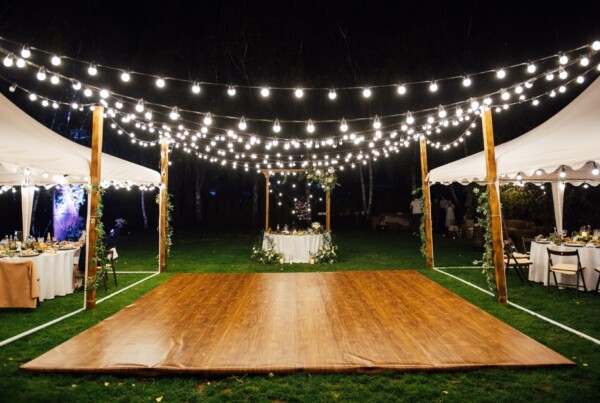
A dance floor or a platform stage gives guests a firm, level surface over soft ground. Ask your rental company what ground each one needs before assuming it can go straight down on a soggy lawn. Patios, decks and driveways are your friends here, so seat older guests there first.
Suburban backyard parties come with a delivery problem of their own. A side gate that opens onto a muddy strip of lawn turns every table into a slow trip, and a crew that drove a long way can’t easily swing back later to move things. If the setup might shift to the garage, say so before the truck arrives.
Make the Call at a Set Hour
Pick a deadline and one person who makes the decision. A committee standing in the yard squinting at clouds burns the exact time you need for moving furniture.
Work backward to set that deadline. If your rental company needs notice to change where things get set up, your call has to land before that cutoff. If you’re moving everything yourselves, allow at least as long as the original setup took, plus time to clear out the backup space. Decide ahead of time what forecast sends you inside, so you aren’t debating it on the day.
The call doesn’t have to be all or nothing. A common middle path keeps cocktails on the covered patio and moves dinner indoors. Lightning changes that: if there’s any around, everyone comes inside, and nobody waits it out under a metal umbrella pole.
What Guests Should Hear and When
Put one line on the invitation: “Rain or shine. If it rains, we’re in the garage, same address.” That sentence saves you a dozen texts the week of.
Once you’ve made the call, send a short message a few hours ahead saying where to go and which door to use. If the lawn is soaked, mention it. People in suede shoes will thank you. The best backup space in the world doesn’t help if guests show up at the wrong door.
Hosts in apartment buildings should loop in the front desk or doorman, too. A note in the lobby pointing to the community room beats 30 guests asking the same question at the elevator.
The best backup space in the world doesn't help if guests show up at the wrong door.
At the entrance, set out a bucket for wet umbrellas, a mat or two, and a pile of old towels for wiping off chairs and shoulders. A taped sign on the front gate pointing toward the garage does more than you’d expect.
Quick Checklist for a Rain Plan
- Backup space chosen, measured and cleared of cars and clutter
- Guest capacity worked out at standing and seated rates
- Two floor plans sketched, with every rented piece placed in both
- Rental company asked about change cutoffs and wet-weather setup
- Tent permits checked, if a tent is part of the plan
- Decision deadline and decision-maker named
- Rain line on the invitation and day-of text drafted
- Towels, mats, an umbrella bucket and a sign for the gate ready to go
Pick the Backup First, Then Everything Else
Weather is the one guest you can’t uninvite, but it’s also the easiest one to plan around if you start early. Settle the backup space before you fuss over linen colors, and the rest of the decisions get simpler. When you book, describe both layouts and where the backup is, and we can match the right furniture and extras to each version of the day. Get in touch with us with your date and headcount.