


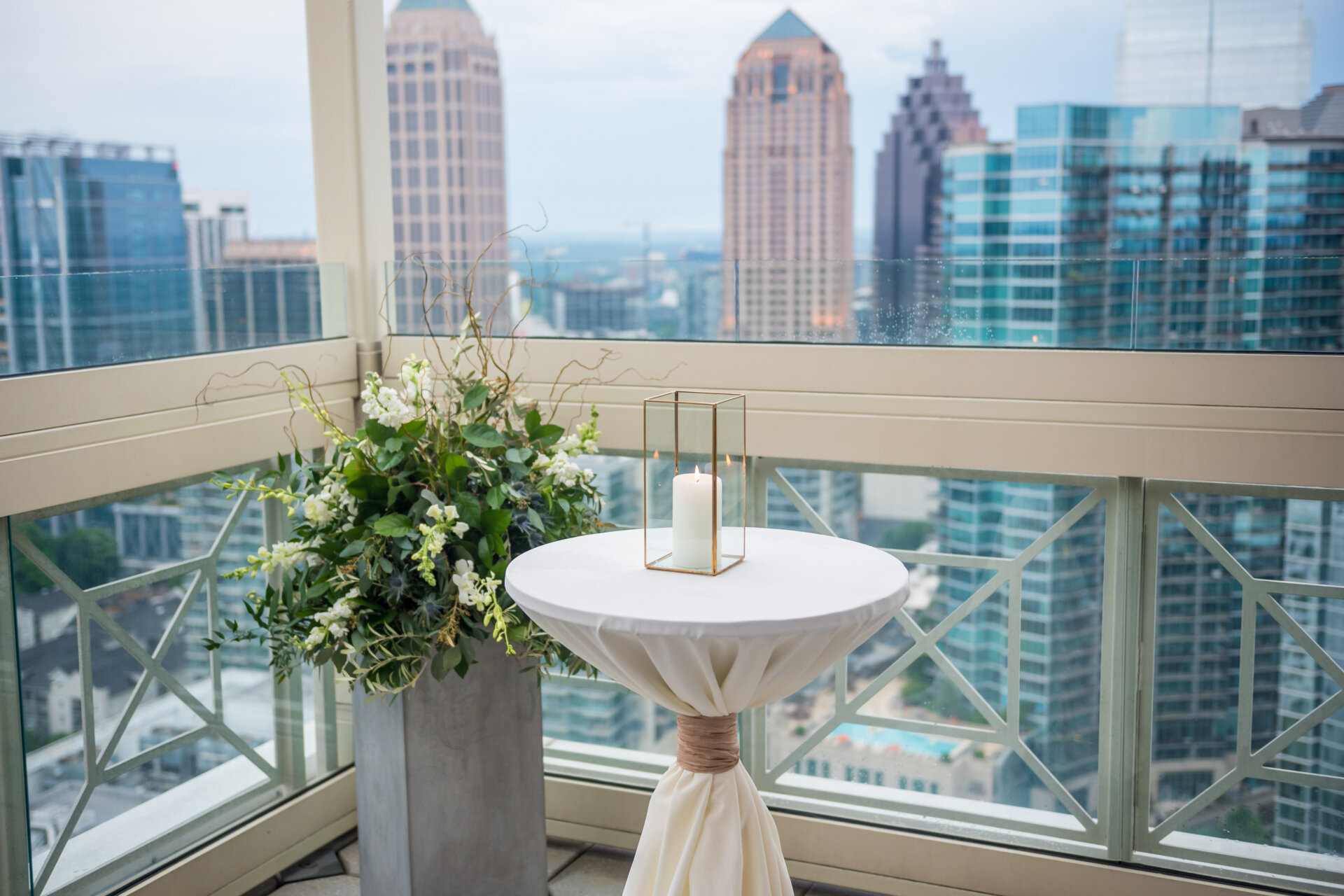
Picture it: you step out of the elevator onto a Manhattan rooftop, the skyline is turning gold behind the railing, and the venue manager mentions in passing that the space is rated for fewer people than your guest list. The tips that matter most for a rooftop wedding in NYC have very little to do with flowers. They come down to how many people the roof may legally hold (vendors included), what happens when wind or rain shows up, and how guests and rentals physically reach the top floor.
Settle those before you sign anything, and the styling becomes the pleasant part. Here’s how to work through each one, along with some notes on furniture that behaves itself twenty stories up.
The Building Decides More Than the View Does
A rooftop is a room without walls sitting on top of someone else’s building, and that building comes with rules. Before you fall for the sight lines, ask the venue to answer the practical questions in writing:
- Is there a freight elevator, what are the cab and door dimensions, and does it reach the roof or stop a flight short? Many rooftops have a final staircase above the top elevator stop, and every bar, table and stage deck has to be carried up it.
- When can vendors load in and out, and does the building require a certificate of insurance from each one?
- Is there a weight limit for the deck? Stages, dance floors, bars and fully stocked refrigerators all put real load on a roof.
- What time does amplified music have to end?
- Where are the power outlets, and how many circuits can vendors share?
- What indoor space is held for you if the weather turns, and does it cost extra?
If the roof belongs to a co-op or condo rather than an event venue, add the board to that list. Residential buildings in Brooklyn and Manhattan often have their own approval process, insurance requirements and quiet hours for roof decks, and none of that goes away because the party is private.
Pro tip
Visit on the same day of the week and at the same hour as your ceremony, and bring a tape measure. You’ll see where the sun sits, how much street noise drifts up, and whether the elevator doors can take an 8-foot table on its side. Those details will shape more decisions than any mood board.
Headcount, Permits and the Sign by the Door
New York City treats a crowded roof as seriously as a crowded ballroom. The Department of Buildings requires a Place of Assembly Certificate of Operation for spaces where 75 or more members of the public gather indoors, and the FDNY’s fire code guide explains that rooftop spaces are treated as indoor assembly areas. In practice, a roof hosting a wedding of any real size generally needs both the DOB certificate and a Fire Department permit, and that permit comes with an annual inspection.
An established rooftop venue should already hold both. Your job is to confirm it: ask to see the certificate, check that the occupancy sign is posted, and make sure the number on it covers your event. If you’re considering a private roof that isn’t a licensed venue, contact the DOB and FDNY before you commit. The rules depend on headcount and how the space is used, and only the agencies can tell you what applies to that particular building.
Everyone on the roof counts
The posted occupancy limits people, not guests. Caterers, bartenders, the band, the photographer and your planner all stand on the same deck. Here’s a quick example with round numbers:
- Guests: 120
- Catering and bar staff: 10
- Band: 5
- Photo and video: 2
- Day-of coordinator: 1
That’s 138 people. On a roof posted for 140, your margin is two, so a couple of surprise plus-ones would put you over. On a roof posted for 125, you’d need to cut 13 people, or move some of the operation (a bar, a catering station) to a lower floor that has its own capacity.
Heads-up
Certificates often list more than one approved arrangement, and the figure for a standing cocktail party can be well above the figure for tables and chairs. Make sure the number the venue quotes you matches the layout you actually plan to use, dance floor and band included.
A Weather Plan With a Deadline Attached
Rooftops are the most weather-dependent way to marry in the city, a point this guide to NYC rooftop venues makes plainly. Its advice is worth repeating: confirm the indoor backup, and exactly what triggers it, before you sign. A backup room nobody has agreed to use is only a hope.
Get specifics in the contract. Find out whether you or the venue makes the call, and how many hours before the ceremony it has to happen. Then ask whether the backup room fits the same furniture. If your rental crew has to set up in two places, or reconfigure on the day, that needs to be arranged in advance, and a rain plan that asks 15 round tables to fit in a room built for 10 isn’t really a plan.
Rain is the obvious threat, though rarely the only one:
- Wind is usually stronger up high than at street level, and it comes in gusts that lift linens, tip empty chairs and scatter programs.
- A summer afternoon on a dark deck can feel much hotter than the forecast, especially for guests in jackets standing through a ceremony.
- Spring and fall evenings cool quickly once the sun drops behind the surrounding buildings.
- A drizzle nobody would notice on the sidewalk can make tile or composite decking slick underfoot.
Furniture That Stays Put When the Wind Picks Up
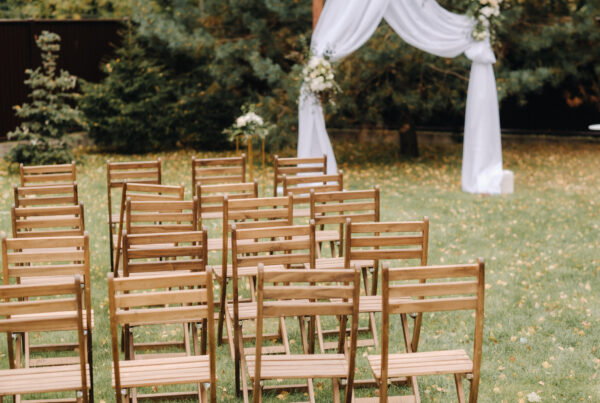
Choose rentals with the gusts in mind. Lightweight folding chairs are easy to carry up a stairwell, but an empty one can skid or tip on an exposed corner. Solid wood chairs, such as cross back styles, have more heft and settle into the deck, and their warm grain reads beautifully against brick, glass and open sky.
High-top cocktail tables are top-heavy by nature. Keep them out of the most exposed corners and away from the railing, and cluster them near walls, planters or the bar where the air is calmer.
Fabric is where wind does the most mischief. A loose, floor-length tablecloth catches every gust, so on an open roof consider fitted spandex covers for highboys, tablecloths clipped beneath the table edge, or a shorter drop that ends well above the deck. When you browse rental linens, order a few spares, and use this guide on how many tablecloths you need to get the count right for your table mix.
Backdrops deserve the same caution. Pipe and drape behaves like a sail in open air, and even solid wall panels need to be properly secured. Often the wiser move is to let the skyline serve as your backdrop and save panels for a sheltered wall. Small decor (place cards, lightweight vases, menus) needs weight or a protected spot, and ask the venue about candles before you plan around them, since many rooftops restrict open flame.
Shade, Warmth and a Place for Coats
For a warm-weather cocktail hour, shade matters as much as seating. Umbrella table rentals give guests somewhere cool to set a drink, with one condition: someone on the venue staff should be responsible for closing the umbrellas if the wind rises.
For spring and fall dates, portable heaters can keep the party outside past sunset. Before you book them, ask the venue which types the building allows. Fuel-burning heaters on city rooftops are governed by fire code rules, some buildings permit only certain models, and the venue and FDNY have the final word.
Cooler months also bring coats, and a roof has no closet. A coat rack placed just inside the elevator lobby or a sheltered vestibule keeps outerwear off the chairs. And since the kitchen is often floors below, a rental refrigerator near the rooftop bar keeps ice, wine and backup mixers within reach instead of an elevator ride away.
Getting 120 People Up One Elevator
Arrival is the part of a rooftop wedding people underestimate. Suppose the passenger elevator comfortably takes 10 guests per trip, and a round trip with doors opening and closing takes about three minutes. For 120 guests, that’s 12 trips, or roughly 36 minutes of nonstop elevator service before everyone is upstairs.
Plan around that number. List an arrival time 30 to 45 minutes before the ceremony on the invitation, station a greeter in the lobby, and set up stanchions so the line forms neatly instead of spilling across the entrance. Older guests and anyone with a mobility concern should go up early, and if there’s a final staircase to the roof, ask the venue about accessible routes. Rentals should arrive and be set well before guests do, because the freight elevator and the passenger line rarely mix well.
Laying Out a Long, Narrow Roof
Most city roofs are long and slim rather than square, which suits a sequence of zones: ceremony at the end with the best view, cocktail tables near the bar, dinner in the middle. Note where the sun will be at ceremony time so neither the couple nor the front rows are squinting into it. This guide to planning a ceremony chair layout covers aisle widths and row spacing, which matter even more when the roof is narrow.
For dinner, 60-inch rounds seat about eight guests comfortably, so 120 guests need 15 tables before you add a bar, a dance floor or a band. On a tight roof, a single long sweetheart table often frees up more space than a head table for the full wedding party. Weigh the trade-off with this comparison of a sweetheart table vs head table.
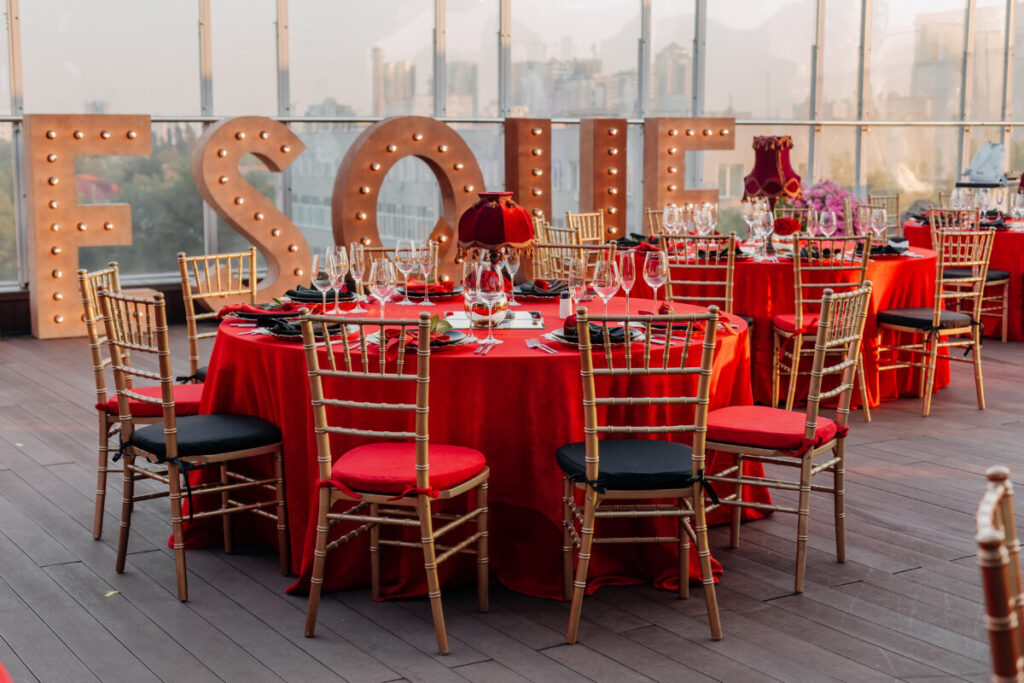
One detail few couples notice until the day: roof decks are often pitched slightly for drainage. Tables wobble, and a dance floor laid directly on pavers can feel uneven. A platform stage laid low as a dance floor creates a level surface for dancing, as long as the venue confirms the deck can carry it.
If the ceremony and dinner share the same space, build time for the flip into your timeline. Moving 120 chairs and setting 15 tables takes a crew a while, so the cocktail hour needs to happen somewhere else, either at the far end of the roof or on a lower floor.
Quick Answers
Do you need a permit for a rooftop wedding in NYC?
Usually the venue holds what’s needed, but confirm it. For gatherings of 75 or more, a DOB Place of Assembly certificate and an FDNY permit generally apply, and rooftops are treated as indoor assembly space. For a private roof, check with the DOB and FDNY directly, as well as with the building’s management or board.
How many guests can a rooftop venue in NYC hold?
It depends on the posted occupancy for your specific layout, minus every vendor working the event. Seated dinners hold far fewer people than standing receptions, so ask for the tables-and-chairs number, not the cocktail figure.
What happens if it rains on a rooftop wedding?
You move to the indoor backup, provided the contract spells one out. Agree in advance on who makes the call and how far ahead, and confirm the backup room fits your tables, chairs and dance floor.
What is the best time of year for a rooftop wedding in NYC?
Late spring and early fall tend to be the most comfortable, with milder afternoons than midsummer. Evenings still cool quickly at height, so plan for heaters or wraps and keep the weather backup in place regardless of the month.
Are rooftop weddings in New Jersey handled the same way?
New York City’s DOB and FDNY rules don’t apply across the river. Rooftops in places like Hoboken, with their views back toward Manhattan, fall under local construction and fire officials, so ask the venue what approvals it holds and confirm with the town. The physical questions about elevators, wind and weight are the same.
The Roof Will Tell You What It Needs
Every rooftop has its own quirks, from the last flight of stairs to the corner where the wind always seems to gather. Once you know the occupancy number, the backup plan and the path from the loading dock to the deck, choosing chairs, tables and linens becomes a matter of taste rather than guesswork. If you’d like help matching rentals to your roof, tell us about your space and date and we’ll talk it through.