


Say you’ve just gotten engaged, and somewhere between the champagne and the phone calls one of you says it would be lovely to exchange vows by the lake in Central Park. Here’s how that works: you apply for a Central Park wedding permit online through the NYC Parks special event permit system at least 21 days before the date. The Conservatory Garden is the exception. It requires a permit no matter how small your group is and has its own application process and notice period, so confirm the current lead time with NYC Parks on the official permit portal before you settle on a date.
The short answer
Apply through NYC Parks’ online event permit portal at least three weeks out (earlier for spring and fall weekends), and hold off on announcing the event publicly until you’re approved. The Conservatory Garden has its own separate process, so check its current notice requirements with NYC Parks before you apply.
I’ve spent a lot of years delivering tables and chairs to receptions that started with a ceremony in the park, and the couples who had the easiest day were the ones who treated the permit as step one, not a box to check the week before. Below are the six steps in the order I’d tackle them.
Step 1. Figure Out Whether Your Ceremony Needs a Permit
This is the question most people start with, and the honest answer is that it depends on where you’ll stand, how many people are coming and what you plan to bring. A couple, an officiant and two witnesses standing on a path for ten minutes is a very different situation from a 60-person ceremony with a rented arch and a guitarist.
Parks rules can treat very small, informal gatherings differently from organized events in some locations, but the details change and certain spots require a permit regardless of size. The Conservatory Garden is the clearest example: the Central Park Conservancy’s wedding and photography guide says a permit is needed there no matter how many guests you have. For anywhere else, check the current rules for your exact location on the city’s portal before you assume you’re exempt.
My rule of thumb: if you have guests beyond immediate family, any kind of setup or a specific spot you’d be heartbroken to lose, apply. A permit gives you a documented reservation of that time and place if someone questions you on the day.
Step 2. Choose a Spot, Then Choose a Backup
Central Park has a handful of places couples ask for again and again. Wagner Cove, the small rustic wooden shelter on the edge of the Lake, is one of the most requested because it’s tucked away and photographs beautifully. Bow Bridge, Bethesda Terrace, Cop Cot, the Ladies’ Pavilion and the Shakespeare Garden all get their share of ceremonies too.
Popularity cuts both ways. The prettiest spots are also the busiest, with tourists, joggers and other wedding parties passing through, especially on weekend afternoons. Walk your top two choices on the same day of the week and at the same time of day you’re planning, and notice:
- How far it is from the nearest park entrance and whether older guests can manage the walk
- Where people will actually stand, since some spots only fit a small group comfortably
- How much foot traffic passes through during your time slot
- Whether there’s shade, because summer sun on an open lawn is no joke
List your backup location in your planning notes from the start. If your first choice isn’t available, you won’t lose days scrambling.
Pro tip
If your guest list can handle it, look at a weekday morning slot. The popular spots are far quieter then, you’ll have fewer strangers drifting into your photos, and you’re less likely to be competing with another couple for the same time.
Step 3. Gather Your Details Before You Open the Application
The application goes faster when you have everything in front of you. Expect to provide your date and start time, how long the ceremony will run including setup and breakdown, an estimated headcount and the exact location. You’ll also want to describe anything you plan to bring into the park.
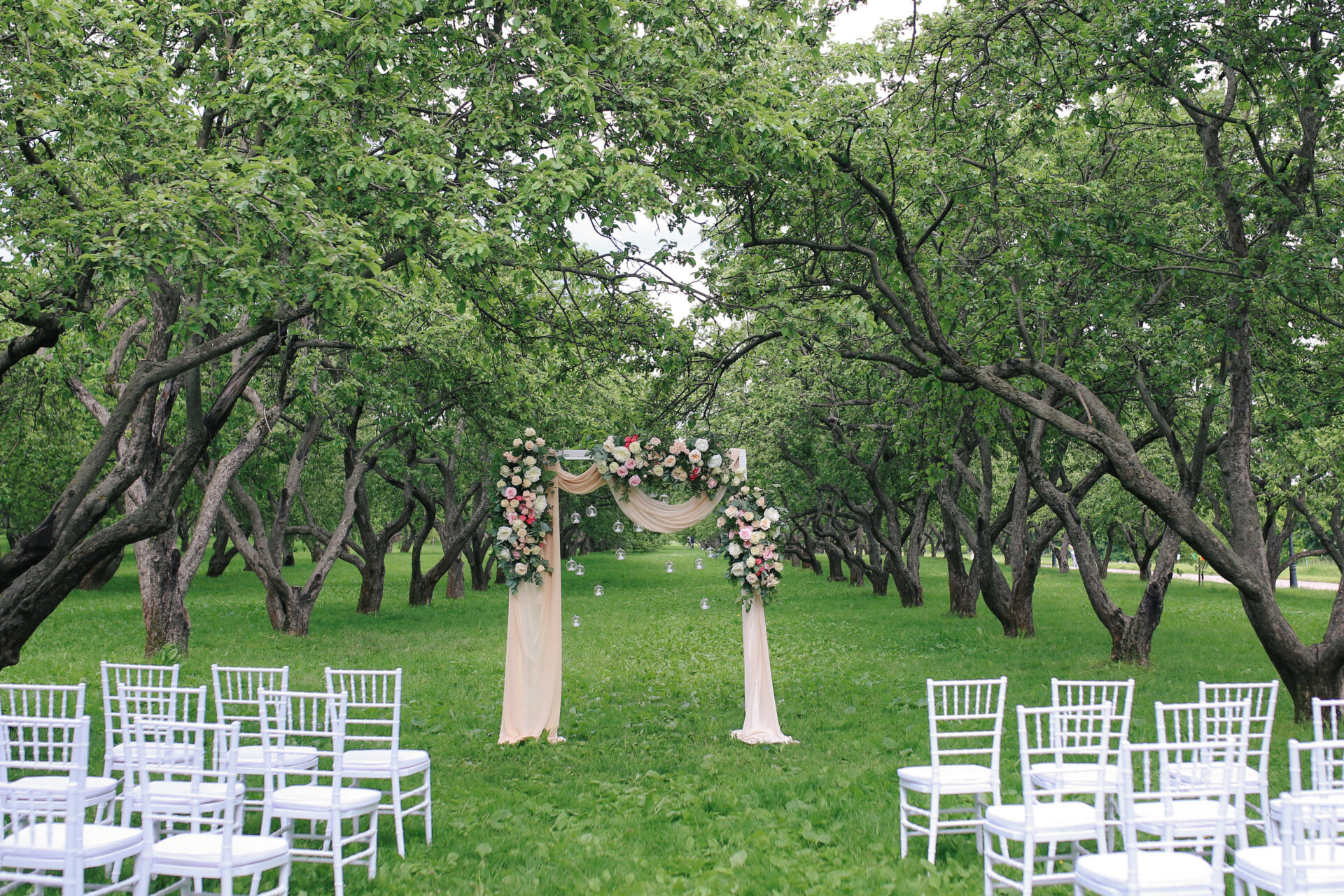
That last part matters more than people expect. Many park locations allow very little in the way of setup, so if you’re hoping for a few chairs for grandparents, a small table for the rings and the license, or a floral arch, say so on the application and let Parks tell you what’s permitted. Amplified sound, even a small speaker for a processional song, generally requires its own separate sound permit, so plan for that or go acoustic.
Step 4. Submit Through the NYC Parks Portal at Least 21 Days Out
Applications go through the NYC Parks special event permits e-apply system, which sets a minimum of 21 days between your application and your event. Treat that as a floor, not a target. May, June, September and October weekends fill fast, and applying two or three months ahead gives you room to pick a second location if the first is taken.
Fees and requirements can change, so read the current instructions on the portal itself rather than relying on a number a friend quoted from their wedding a few years ago. If anything is unclear, contact the agency directly; they’re the only ones who can give you a definitive answer.
Step 5. Wait for Approval Before You Announce Anything
The NYC Parks permit portal indicates that events shouldn’t be advertised until the permit is approved. Rules and wording can be updated, so read the current terms on the portal when you apply, and ask NYC Parks directly if you’re unsure what counts as advertising for a private ceremony. For most couples, the safe approach is simply holding off on sending invitations or posting the location on a wedding website until you have the approval in hand.
It’s tempting to print invitations the day you apply. Don’t. Use the waiting period to work on everything else, like booking the officiant and getting the marriage license (a separate legal document from the park permit). It’s also a good time to settle where everyone goes once the ceremony is over.
Step 6. Plan the Day Around the Permit
Once approved, print the permit and keep a copy on your phone. Give one to whoever is coordinating on the day, whether that’s a planner or a reliable friend, because the couple shouldn’t be the ones digging through emails if a park officer stops by.
A few more things I’d sort out ahead of time:
- A weather plan, since a permit won’t stop the rain and many park spots have no cover
- Clear directions for guests, ideally naming the closest entrance and a landmark
- Someone assigned to make sure nothing is left behind, from petals to programs
- Arrival and departure timing that respects the slots on either side of yours
Photography Permits and the Conservatory Garden
Many couples ask whether they need a photography permit for their Central Park wedding, on top of the ceremony permit. In general, casual handheld photography in public parts of the park doesn’t trigger a separate permit, and plenty of couples do portraits on Bow Bridge or at Bethesda Terrace with just a photographer and a camera. Things change when a shoot starts to look like a production, with lighting rigs, large crews or equipment blocking paths, so ask your photographer what they’re planning to bring and check the rules if it’s more than a camera bag.
The Conservatory Garden is the place where photography clearly needs attention. The Conservancy’s guide covers both weddings and photography there, and the permit requirement applies regardless of group size. Lead times for the Garden can differ from the standard 21 days and may change, so check the current notice period with NYC Parks on the official permit portal. If the Garden is on your list for portraits, build that application into your timeline.
Where the Rentals Come In
Since the park ceremony itself is usually spare, the reception is where you get to fill in the comfort and style. Some couples book a restaurant’s private room; others take everyone back to a loft, a backyard or a family home. Our article on reception ideas for small NYC celebrations has setups that work just as well after a park ceremony.
For a home or loft reception, you’ll likely need tables, chairs and linens at minimum, and maybe a bar. If you’re choosing a chair style, see our guide to stylish wedding chair rentals. And if the budget took a hit from the dress and the photographer, these budget-friendly reception tips help stretch it.
One local detail catches people off guard. If the reception is in an apartment building, management often wants a certificate of insurance from any vendor delivering furniture and may limit deliveries to certain hours or the service elevator, so ask your building early. For a backyard party, just confirm a delivery truck can get reasonably close.
The Upsides and Downsides of a Central Park Ceremony
Once you’ve pictured the whole day, from the walk to your spot to the moment everyone sits down for dinner, it helps to be clear-eyed about what a park ceremony gives you and what it doesn’t.
Pros
- A backdrop that needs almost no decoration
- Easy for guests to find using well-known landmarks
- Keeps the ceremony short and relaxed, which suits small weddings
- Wonderful photos in every season
Cons
- A permit doesn’t usually close the area, so expect onlookers
- Little or no furniture and decor allowed at many spots
- Weather can upend the plan with no indoor fallback
- Restrooms and accessible paths may be a walk away
- You still need a separate place for the reception
FAQs
Do you need a permit to shoot a wedding in Central Park?
For simple handheld photos in public areas, a separate permit generally isn’t required. Shoots involving significant equipment or crews, and any photography session in the Conservatory Garden, may need one. Check the current rules for your location before the day.
How far in advance should I apply for a Central Park wedding permit?
The minimum is 21 days through the NYC Parks portal. The Conservatory Garden has its own process and notice period, so confirm its current lead time with NYC Parks. For popular spring and fall weekends, applying two to three months ahead is far less stressful.
Do you need a permit to get married at Wagner Cove in Central Park?
Wagner Cove is one of the most requested ceremony spots, so it’s very much worth securing your time slot with a permit. Confirm current requirements for that location on the city’s event permit portal when you apply.
Is a park permit the same as a marriage license?
No. The permit covers your use of the park space. The marriage license is a separate legal document you obtain on your own, and you’ll need both.
Can we bring chairs to a Central Park ceremony?
Sometimes, depending on the location. List anything you’d like to bring on your application, even a few seats for older relatives, and follow whatever Parks approves.
From the Lake to the Reception
Get the permit squared away first, keep the ceremony simple, and put your energy into the part of the day where people sit down, eat and stay a while. If your reception is somewhere in the New York area and you’d like help pulling together tables, chairs, linens or a bar, reach out to our team and we’ll talk through what your space can hold. Congratulations, and enjoy the walk across the park.