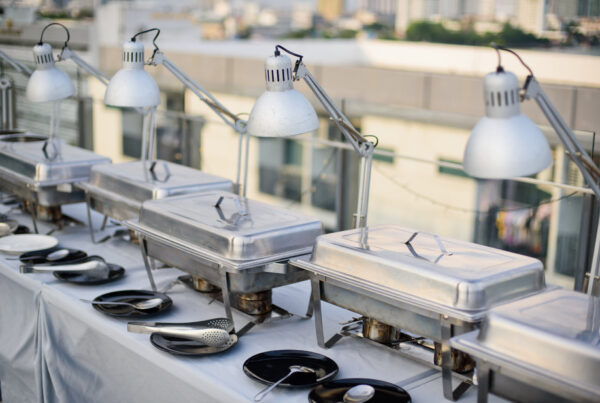



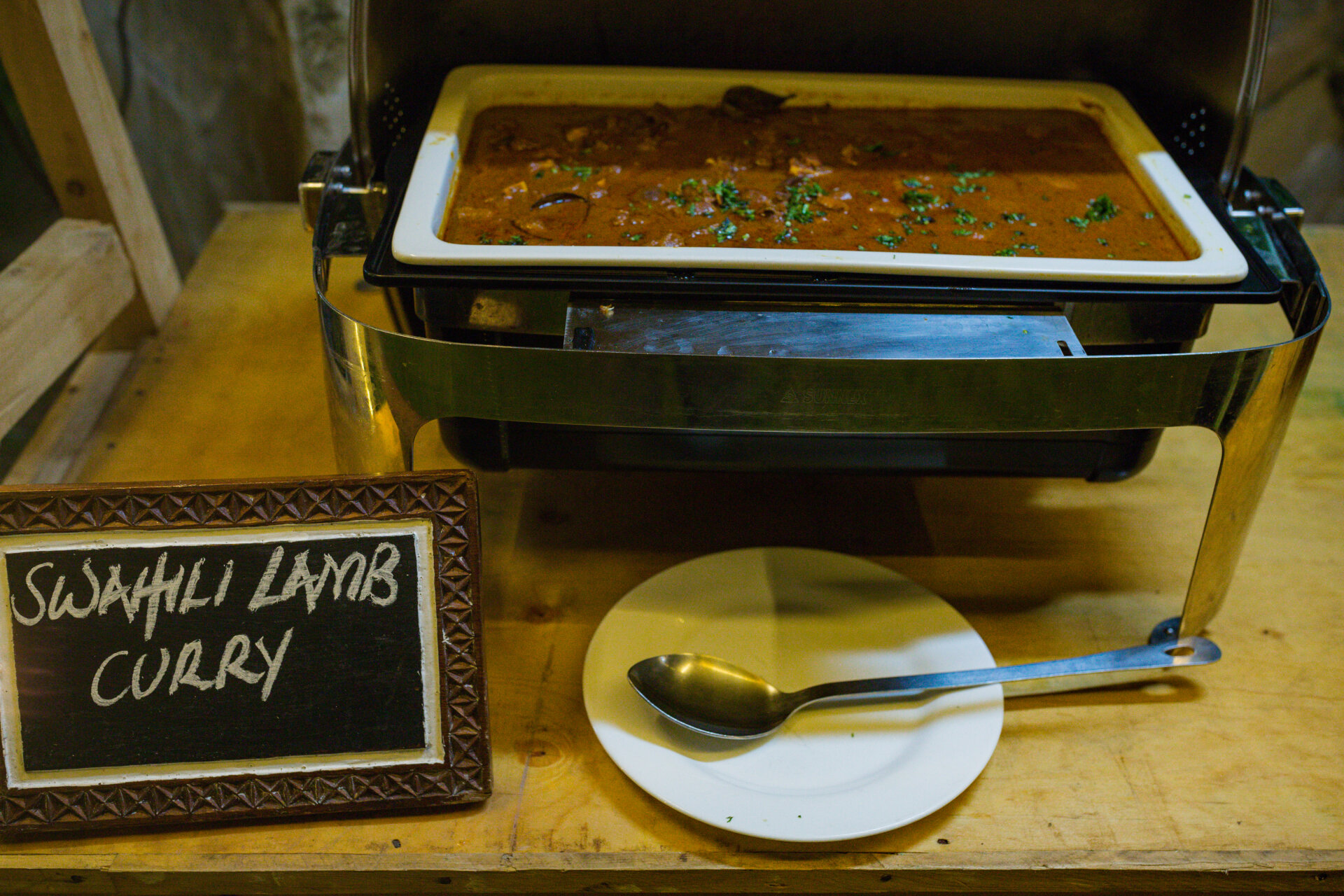
So you want to know how big a half pan actually is, and whether it’ll fit in the chafing dish you’re planning to use. A standard half size steam pan measures about 12 by 10 inches across the top, and two of them sit side by side in a regular full-size chafing dish. A full pan is about 12 by 20 inches, so a half pan is exactly what it sounds like: the full pan cut in half the short way.
That’s the quick answer. The part that trips up first-time hosts is everything around it: how deep the pan is, why a “half sheet pan” from the baking aisle is a totally different thing, and how many people a pan of food will actually feed. That’s what the rest of this covers.
Full and Half Pan Dimensions in Plain Numbers
Steam table pans (also called hotel pans or food pans) follow a shared sizing system, so a half pan from one brand fits a chafer from another. The numbers people quote are nominal, meaning the pan is a hair bigger at the rim so it can hang on the frame. A half pan’s outer rim usually measures closer to 10 3/8 by 12 3/4 inches.
- Full pan: about 12 by 20 inches
- Half pan: about 12 by 10 inches
- Third pan: about 12 by 7 inches
- Half-long pan: about 6 by 20 inches, handy for skinny items like rolls or sausages
You’ll also see two-thirds, quarter, sixth and ninth sizes, but for a party buffet, full and half pans do almost all the work. This side-by-side breakdown of hotel pan sizes shows how the fractions fit together in one frame.
Depth matters as much as length and width
The footprint stays the same, but the depth changes how much food the pan holds. The common depths are 2 1/2, 4 and 6 inches. Here’s roughly what each holds when filled to the brim (exact figures vary a little by brand):
- Half pan, 2 1/2 inches deep: about 4 quarts
- Half pan, 4 inches deep: about 6 to 7 quarts
- Half pan, 6 inches deep: about 10 quarts
- Full pan, 2 1/2 inches deep: about 8 quarts
- Full pan, 4 inches deep: about 13 quarts
- Full pan, 6 inches deep: about 20 quarts
The 2 1/2 inch depth is the standard for chafing dishes, and it’s what most caterers mean when they say “a half pan” or “a half tray.” Deeper pans are better for soups, stews or anything saucy. Gerharz’s steam table pan guide goes through which depths suit which foods if you’re cooking something unusual.
The disposable aluminum half pans sold at grocery and restaurant supply stores follow the same footprint, usually in a shallow and a deep version. Check the depth on the label before you buy a stack of them.
Half Pans Against Full Pans on a Buffet
Since one full chafer holds either one full pan or two half pans, you get to choose. For most home parties, I lean toward half pans, but they aren’t always the better call.
Pros
- Two different dishes can share one chafer, so you need fewer chafers on the table
- Smaller pans get swapped out faster, so the food on the line always looks fresh
- Easier to carry, especially for a volunteer helper who isn’t used to hot, heavy pans
- Food holds better in smaller batches because it doesn’t sit under the heat as long
- Fits in a home oven, which a full pan often won’t
Cons
- More refills during the meal, which means someone has to keep an eye on the line
- Popular dishes can run out quickly at the start when everyone lines up at once
- More pans to buy, label and track
A simple middle ground: put your most popular entree in a full pan and give the sides half pans. That way the dish everyone goes for first doesn’t need a refill five minutes into dinner.
The Half Sheet Pan Is a Different Pan Entirely
This is where a lot of searches go sideways. A half sheet pan is a baking sheet, not a steam pan. The size of a half sheet pan is about 18 by 13 inches, with a rim only about an inch tall. A half sheet cookie pan is the same thing. It’s the workhorse of home baking, and it won’t fit into a chafing dish frame.
The baking family goes like this: a full sheet pan is about 26 by 18 inches (too big for most home ovens), a half sheet is 18 by 13, and a quarter sheet is about 13 by 9. That quarter sheet is the same footprint as the classic 9 by 13 casserole dish.
Which answers another common question: what size pan is half of a 9-by-13 pan? Half of 117 square inches is about 58 square inches, and the closest common pan is an 8 by 8 square, at 64 square inches. Your batter will be a little thinner in the 8 by 8, so check it a few minutes early.
One more note so nobody gets confused at the bakery counter. A “half sheet cake” is a bakery term, and the size varies from shop to shop. Ask for the actual dimensions and servings rather than assuming it matches the pan.
How Many People a Half Pan Feeds
Here’s the question that really matters for your planning. The common catering rule of thumb is that a standard 2 1/2 inch half pan feeds about 10 to 12 people as an entree, or about 15 to 20 people as a side dish. Here’s where those numbers come from.
A half pan holds about 4 quarts to the brim, but nobody fills it to the brim. Filled to about half an inch below the rim, you have a bit over 3 quarts, roughly 12 to 13 cups of food.
Entrees
A buffet entree portion runs about 1 cup, a little more for something like chicken in sauce. Twelve or thirteen cups divided by about 1 cup a person gets you to 12 servings, and 10 to 12 is the safer number once you account for the guest who takes a big scoop. For pieces like chicken thighs or meatballs, count the pieces instead: if each guest takes two, a pan of 24 pieces feeds 12.
Sides, pasta and salads
Side portions run about 1/2 to 3/4 cup. At 3/4 cup, 12 cups feeds 16. At 1/2 cup, it feeds 24, but buffet guests rarely stop at a half cup. That’s why 15 to 20 is the realistic range. Pasta and rice tend toward the higher end because people take bigger scoops of the familiar stuff.
How big is a half pan of lasagna?
A half pan of lasagna is about 10 by 12 inches, which is close in area to a 9 by 13 baking dish (about 120 square inches against 117). Cut it 3 by 4 and you get 12 pieces, each about 3 by 3 1/3 inches. That’s a solid entree portion, so a half pan of lasagna feeds about 10 to 12 people, the same as any other entree.
For a full pan, double everything: about 20 to 24 entree servings or 30 to 40 side servings. This walkthrough on calculating chafing dish capacity uses the same basic approach if you want to check your math on a bigger event.
Pro tip
When you order trays from a restaurant or caterer, ask how many people they think each half tray feeds for your menu. Some places pack their trays generously and some don’t, and their answer will tell you more than any chart. Then ask whether the tray is shallow or deep, because a deep half pan can hold half again as much food.
Counting Pans for Your Guest List
Let’s walk through a real example: 60 guests, two hot entrees and three hot sides. You can follow the same steps with your own numbers.
- Figure out entree servings. With two entrees, most guests take some of each, so plan each one for about three-quarters of your headcount. For 60 guests, that’s 45 servings per entree.
- Convert to half pans. At 10 to 12 servings a half pan, 45 servings needs 4 half pans (40 to 48 servings). Two entrees means 8 half pans, or 4 full pans if you prefer.
- Do the sides. Most guests take most of the sides, so plan each for the full 60. At 15 to 20 servings a half pan, each side needs 3 to 4 half pans. Three sides comes to 9 to 12 half pans.
- Total it up. That’s 17 to 20 half pans of food for the whole party.
- Count chafers by what’s on the line, not by total pans. Five hot dishes means five half pans out at once. Each full-size chafer holds two, so 3 chafers covers it with one spare slot for a sauce or a vegetable.
- Plan where the backup pans wait. The other 12 to 15 half pans stay hot somewhere else until it’s time to swap them in.
A full-size chafer takes up roughly 2 feet of table length, so three of them fit on an 8-foot banquet table with a little elbow room. Put the plates on their own small table at the start of the line. The buffet table setup guide covers the order of everything so the line keeps moving.
Keeping the Backup Pans Hot
That step 6 is where home parties get stuck. Your oven fits maybe two or three half pans, and it’s already busy. If you’re hosting more than a couple dozen people, an oven warmer solves the problem: it holds a stack of pans at serving temperature so you can swap a fresh one onto the buffet in seconds. It plugs into a regular outlet, so pick its spot near one before the party, and keep it out of the walkway.
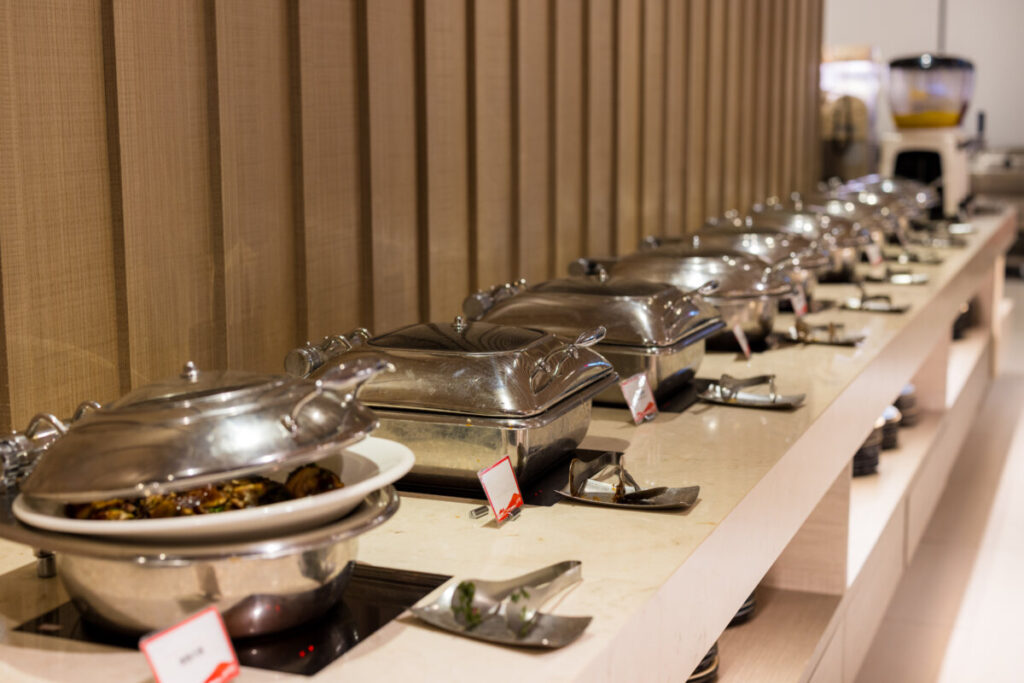
Chafers themselves run on fuel cans placed under the water pan, and a standard can burns for a couple of hours. Have extra on hand and a long lighter. Pour hot water (not cold) into the water pan so the food doesn’t spend its first half hour cooling down. A general guide to chafing dish types explains the difference between the frames you’ll see if you’re choosing between styles.
If your buffet is outside, think about wind. A backyard graduation in Suffolk County in June can look calm at noon and gusty by four, and a breeze will blow out chafer flames or keep them from heating the water. Set the buffet against the house or a fence, and check the flames every time you refill a pan.
For a house party on Staten Island where the food is coming from a restaurant, ask what time the trays will arrive, and have the oven warmer turned on before they come through the door. If you’re also renting refrigeration for cold dishes and drinks, planning your party catering equipment together saves you from doing the space math twice.
Common Mistakes With Buffet Pans
None of these are disasters, but each one is easy to avoid once you know about it.
- Buying a half sheet pan when you meant a half steam pan. They have similar names and completely different shapes.
- Buying deep disposable pans and assuming they’ll seat properly in the chafer frame. Most do, but test one at home first, with the water pan in.
- Putting everything out at once. Two full half pans of each dish on the table at the start looks generous, but by the end of the night, the bottom pan has been under heat for hours.
- Forgetting serving utensils. Each pan needs its own spoon or tongs, plus a spot to rest them.
- Counting servings only for the first round. If your party runs long, a few guests will come back. Rounding up by one half pan per entree covers it.
- Leaving no one in charge of refills. Pick a helper, show them where the oven warmer is, and let them own the buffet for the night.
Pick Your Pans, Then Plan the Table
Once you know your half pan count, the rest falls into place: how many chafers go out on the line, how much warming space you need behind the scenes, and how long your buffet table has to be. Write the menu down, run each dish through the servings math, and add one extra pan for the dish you know everyone loves.
If you’d like help working out chafing dishes, an oven warmer or the buffet tables themselves for your party, send us your guest count and menu and we’ll talk it through with you. Have a great party, and save me a plate of the lasagna.