


For 100 seated guests, plan on 13 tables if you use 60-inch rounds or 8-foot banquet tables at a comfortable 8 people each, or 10 tables if you’re willing to seat 10 at each one. Six-foot rectangles need 13 to 17, and 72-inch rounds get you there with 10. The count changes with table shape and how tightly you pack each table, and it doesn’t include the buffet, cake, gift and cocktail tables that every 100-guest event also needs.
Here is the reasoning behind each number, so you can adjust it for your own room and guest list.
The Short Count by Table Type
These are dining tables only, for exactly 100 guests, rounded up because nobody sits at half a table:
- 60-inch round at 8 per table: 100 / 8 = 12.5, so 13 tables (104 seats)
- 60-inch round at 10 per table: 10 tables (100 seats, no spares)
- 72-inch round at 10 per table: 10 tables
- 8-foot rectangle at 8 per table: 13 tables (104 seats)
- 8-foot rectangle at 10 per table, using the ends: 10 tables
- 6-foot rectangle at 6 per table: 100 / 6 = 16.7, so 17 tables (102 seats)
- 6-foot rectangle at 8 per table, using the ends: 13 tables (104 seats)
A cross-check from a folding table size guide lands in the same place: about 13 sixty-inch rounds, 10 to 13 eight-foot rectangles, or 13 to 17 six-foot rectangles for 100 people. The spread in those ranges comes from the difference between comfortable seating and maximum banquet seating, which the next section explains.
Key takeaways
- 13 tables is the comfortable answer for 100 guests at 60-inch rounds or 8-foot banquets.
- Seating 10 per table cuts the count to 10, but each guest loses about 5 inches of elbow room.
- Add 4 to 9 non-dining tables for food, cake, gifts, check-in and similar stations.
- A cocktail hour for 100 usually runs on 8 or so highboys; an all-night cocktail party needs closer to 12.
Where the Seat Counts Come From
Every number above traces back to one rule of thumb: about 24 inches of table edge per guest. That’s roughly the width of a chair plus a little room to lift a fork without hitting a neighbor. The banquet table capacity chart from SeatPlanning uses the same figure and arrives at 8 comfortably (10 at most) for a 60-inch round, 6 for a 6-foot rectangle and 8 for an 8-foot rectangle.
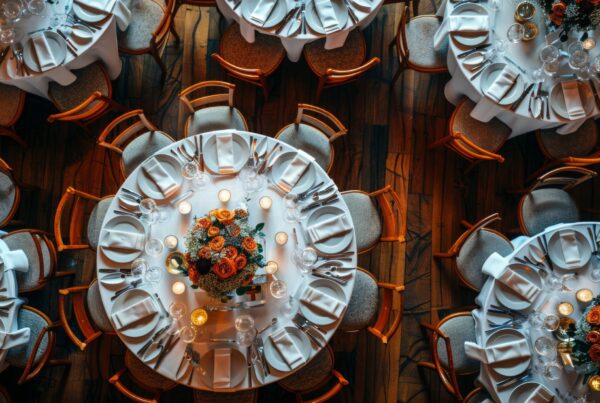
Run the math on a 60-inch round. Its circumference is about 188 inches (60 x 3.14). Divide by 24 and you get 7.85, which rounds to 8 people. Squeeze in 10 and each guest gets about 18.8 inches. That works for a short luncheon or a crowd of kids, but at a plated dinner with chargers and wine glasses it feels tight.
Rectangles work the same way. An 8-foot table is 96 inches long, so each side holds 4 people at 24 inches apiece, for 8 total. The two ends add one chair each, bringing it to 10, though those end guests sit with the table legs near their knees on most folding banquet tables.
Round Tables for 100 Guests
60-inch rounds
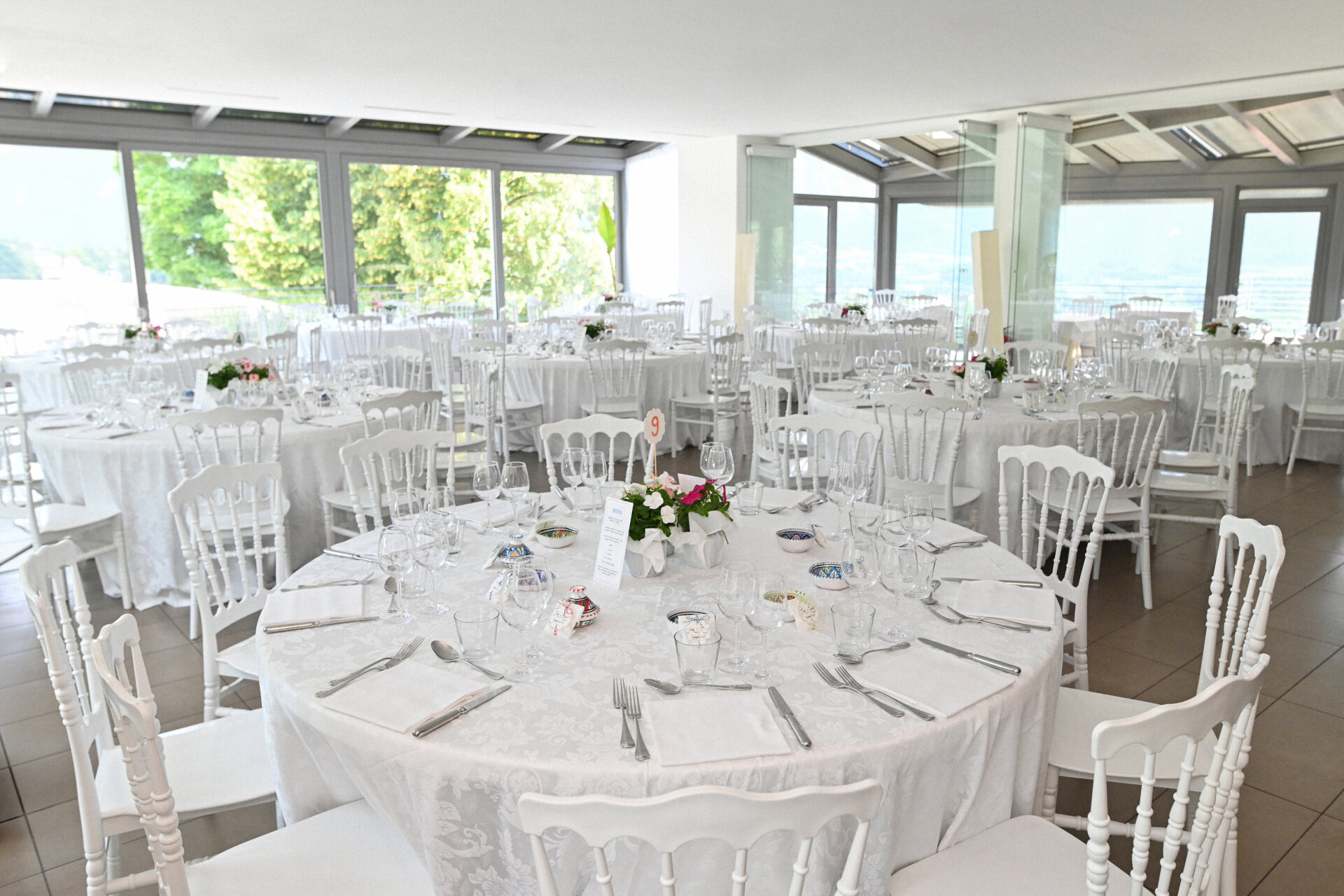
This is the most common reception table, and 13 of them seat 100 with 4 spare chairs. Those spares come in handy for a late RSVP or a guest who needs a wheelchair space, and they let a family sit together without splitting across two tables. If your room is tight and the meal is casual, 10 tables at 10 guests each will work, but you’ll have zero spare seats.
72-inch rounds
A 72-inch round has about 226 inches of edge. At 10 guests each person gets roughly 22.6 inches, close to the comfortable 24, so 10 tables handle 100 guests without much crowding. Pushing to 12 per table (9 tables, 108 seats) drops each guest to about 18.8 inches, the same squeeze as 10 at a 60-inch round. Fewer, bigger tables also mean fewer centerpieces and fewer linens, though each one takes more floor. Our guide on choosing round table sizes walks through the other diameters if you’re deciding between them.
How Many Banquet Tables You Need for 100 Guests
8-foot rectangles
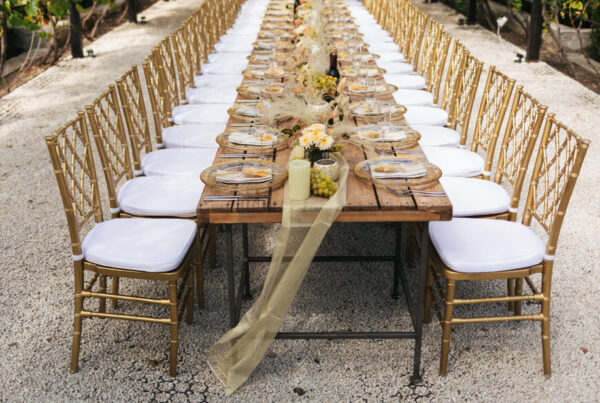
At 4 guests per side with the ends left open, 13 tables seat 104. Using the ends gets you to 10 tables. Banquet tables are easy to line up in rows, which helps in long, narrow rooms like a church hall or a converted warehouse space.
6-foot rectangles
These hold 3 per side, so 17 tables at 6 guests each seat 102. Adding an end chair on each side brings it to 8 per table and 13 tables. Six-footers are handy in rooms with odd corners because they fit where an 8-foot table won’t.
Long family-style rows
Pushing tables end to end changes the count, because only the outer ends of each row can hold a chair. A row of four 8-foot tables is 32 feet long and seats 32 along the sides (4 tables x 8) plus 2 at the ends, for 34. Three of those rows seat 102 guests on 12 tables. Check that the room is long enough: three 32-foot rows need a space well over 32 feet in one direction once you allow walking room at each end.
Tables That Don’t Seat Anyone
Planners often order exactly enough dining tables and forget everything else that needs a flat surface. For a 100-guest event, a typical list of extras looks like this:
- Buffet: 2 to 4 eight-foot tables depending on how many dishes and whether the line is single or double-sided
- Cake or dessert: 1 table, often a 48-inch or 60-inch round
- Gifts and cards: 1 table near the entrance
- Escort cards or check-in: 1 table, sometimes combined with gifts
- DJ or band: 1 rectangle, if the entertainer doesn’t bring their own
- Coffee or drinks station: 1 table, if you’re not renting a separate bar
Depending on which of these apply, that’s 4 to 9 more tables on top of the 13 dining tables. The low end is 2 buffet tables, a cake table and a combined gift and check-in table; the high end is every line on the list at its largest. If food is served buffet style, our article on buffet table setup covers how many tables a menu actually takes.
Pro tip
Order one more 6-foot or 8-foot rectangle than your list says. On event day there’s always something without a home, like the caterer’s staging area or a guest book someone forgot to mention. A spare table costs far less hassle than clearing off a dining table at the last minute.
Cocktail Tables for 100 Guests
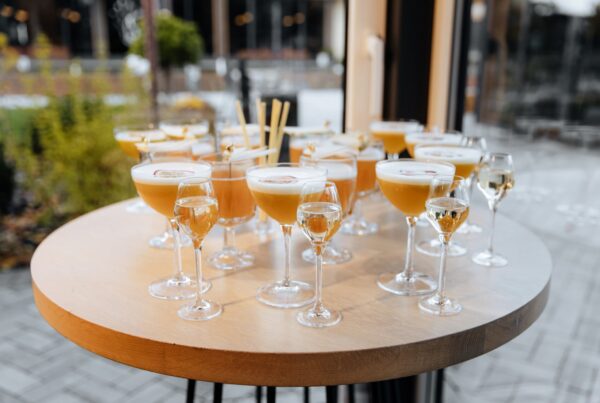
Cocktail tables aren’t about seating, so the math is different. A 30-inch highboy has about 94 inches of edge, which comfortably fits 4 standing guests resting a drink and a small plate.
For a cocktail hour before a seated dinner, most guests are moving between the bar and passed food, so plan for roughly a third of them to have a spot at any moment. A third of 100 is about 33 people, and 33 / 4 is just over 8, so 8 highboys is a sensible number. For a cocktail-style reception that runs all evening with no assigned seats, plan for about half the guests to have a table: 50 / 4 = 12.5, so 12 or 13 highboys, plus some lounge or low seating for older guests. Read our piece on renting highboy tables before you pick heights and linens.
A 100-Guest Wedding Reception, Counted Out
Say the couple wants a head table for themselves and 6 members of the wedding party, round tables for everyone else, a buffet and a short cocktail hour.
- Head table: 8 people sitting on one side only. Lining up a pair of 8-foot tables yields 192 inches along the guest-facing side, and 192 / 24 = 8 seats. That’s 2 tables.
- Remaining guests: 100 – 8 = 92. At 8 per 60-inch round, 92 / 8 = 11.5, so 12 rounds (96 seats, 4 spares).
- Buffet: 3 eight-foot tables for a double-sided line.
- Cake: 1 round. Gifts and escort cards: 1 rectangle.
- Cocktail hour: 8 highboys, as calculated above.
Total: 19 standard tables (2 + 12 + 3 + 1 + 1) and 8 highboys. Chairs: 8 at the head table plus 96 at the rounds, so 104 chairs, which covers 100 guests with 4 spares built in. Notice how the answer to “how many tables for 100 guests” grew from 13 to 27 once the whole event was counted.
Chairs, Linens and Floor Space Follow the Table Count
Once the table count is settled, the rest of the order falls into place. If you’re asking how many tables and chairs you need for 100 guests, the chair number is simply the total seats at your dining tables, which is usually 100 plus the spares the table math leaves you. Don’t order chairs for the highboys unless you want bar stools there.
Linens go one per table, including the buffet, cake and gift tables, and the highboys. In the example above that’s 27 tablecloths before napkins, and it’s easy to come up short if you count only the dining tables.
Floor space is the check that catches overambitious plans. A seated dinner generally needs about 10 to 12 square feet per guest at the tables, so 100 guests need roughly 1,000 to 1,200 square feet before you add a dance floor, buffet or bar. If the room is smaller, 72-inch rounds or long family-style rows usually fit better than scattered 60-inch rounds. The article on arranging tables and chairs for guest flow shows how to lay them out with clear aisles.
Access matters as much as square footage once you’re moving 20 or more tables. For a backyard party, measure the side gate and the path to the lawn, and check that the ground is level enough for rounds. For a loft in Long Island City or a building with a freight elevator, ask management early about delivery windows and any insurance paperwork they need from the rental company. And if the tables are going out on a New York City street for a block party, you’ll generally need a Street Event permit; the NYC Street Events guidelines explain the permit types and application timing, so check the current requirements there and apply well ahead.
Heads-up
Don’t plan 10 tables at 10 guests each and then order exactly 100 chairs. That setup has zero margin: one unexpected plus-one or one wheelchair space and a guest is left standing. If you choose the tighter seating to save floor space, add at least one extra table and a handful of chairs to the order.
What to Ask Before You Book
- Which table sizes are available for your date, and can you mix rounds and rectangles?
- How many guests do they recommend per table for a plated dinner versus a buffet?
- Are linens sized for each table type, including the highboys?
- Does delivery include carrying tables up stairs or into a backyard, and is setup included?
- What does the venue or building need from the rental company, such as a certificate of insurance or a delivery window?
- How late can you adjust the count after final RSVPs come in?
FAQs
How many tables do I need for 100 guests?
For comfortable seating, 13 tables, either 60-inch rounds or 8-foot banquet tables at 8 guests each. If you seat 10 per table, you need 10. Add separate tables for food, cake and gifts on top of that.
How many banquet tables do I need for 100 guests?
With 8-foot banquet tables, 10 to 13 depending on whether guests sit at the ends. With 6-foot banquet tables, 13 to 17. Pushed together into long rows, twelve 8-foot tables in three rows of four seat 102.
How many cocktail tables are needed for 100 guests?
About 8 highboys for a cocktail hour before dinner, and roughly 12 to 13 if the whole event is a standing cocktail party. Each 30-inch highboy fits about 4 guests.
Can 10 people fit at a 60-inch round table?
Yes, but it’s tight. Each guest gets about 18.8 inches of table edge instead of the comfortable 24. It works for short events and kids, less well for a full plated dinner.
Should I order extra tables and chairs?
Yes. Rounding up to the next full table usually gives you a few spare seats automatically, and one extra rectangle for miscellaneous items saves trouble on the day.
Count the Guests, Then Round Up
Start with your final guest count, pick a table shape that suits the room, divide by a comfortable number per table and round up. Then list every non-dining table and every highboy before you call anyone. With that list in hand, you can browse our table rentals to compare sizes, and when you’re ready to check availability for your date, get in touch with B&B Party Rentals and we’ll go over the count with you.