


Picture it: banquet tables are coming Saturday for a backyard graduation party, and the linen listing says 90×156. Is that a tablecloth or a parachute? For a standard 8-foot rectangle table (96 inches long, 30 inches wide, about 30 inches tall), a 90 by 156 inch tablecloth hangs down to floor level around the entire table. If you want a shorter, lap-length look, a 60 by 120 inch cloth gives you about 15 inches of drop on the long sides and 12 on the ends.
That covers most people. The rest of this is about the exceptions, the math behind those numbers, and the handful of ways an order can come up a few inches short.
The Sizes That Fit an 8-Foot Banquet Table
Tablecloth sizes are always listed width first, then length, in inches. Here’s how the common rectangle sizes land on a standard 8-foot banquet table that’s 30 inches wide and 30 inches tall.
| Tablecloth size (inches) | Drop on long sides | Drop on ends | What it looks like |
|---|---|---|---|
| 60 x 102 | 15 inches | 3 inches | Wrong table. This is a 6-foot size, and the ends barely cover the edge. |
| 60 x 120 | 15 inches | 12 inches | Lap length, the everyday banquet look |
| 90 x 132 | 30 inches (floor) | 18 inches | Floor on the sides, table legs showing at the ends |
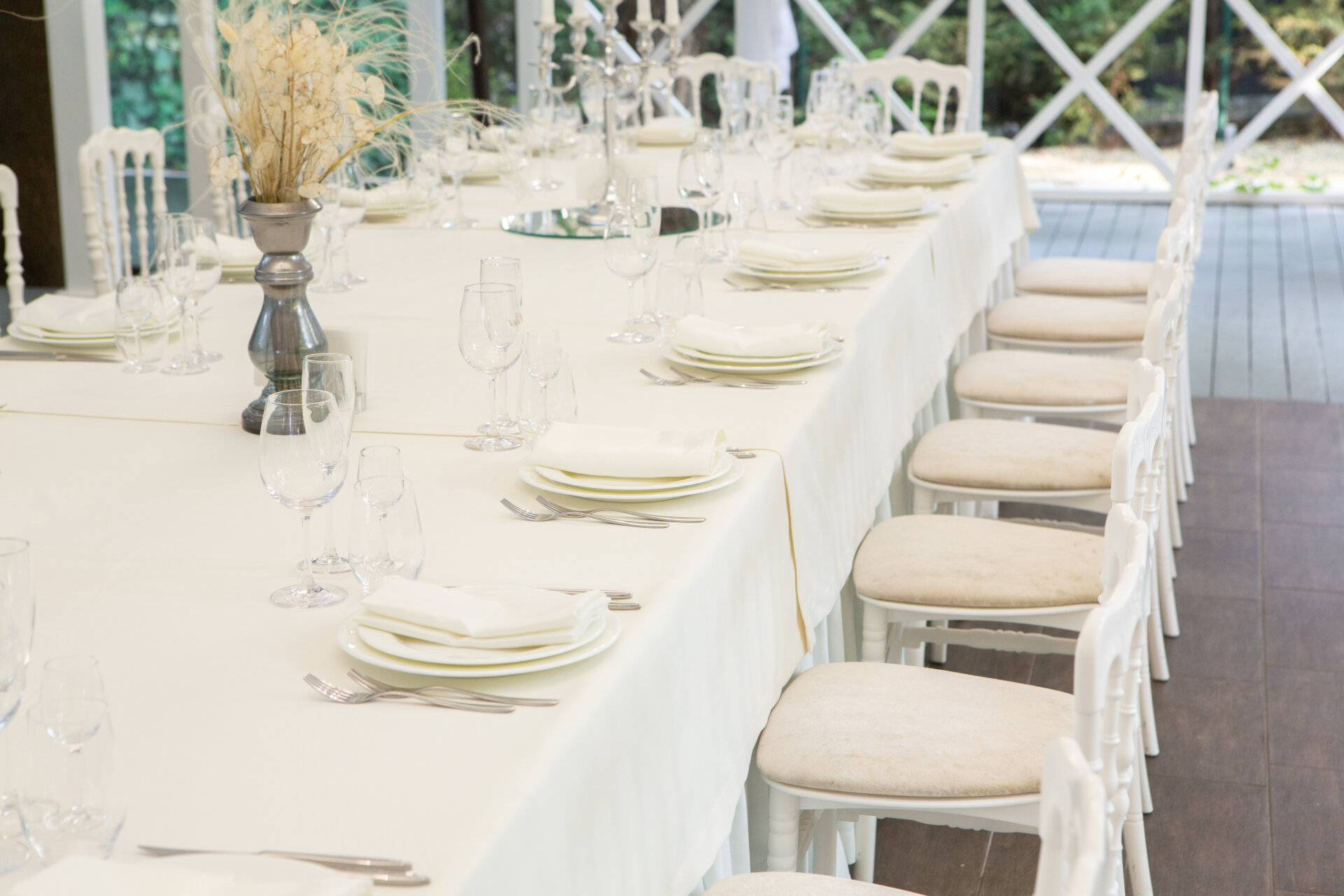
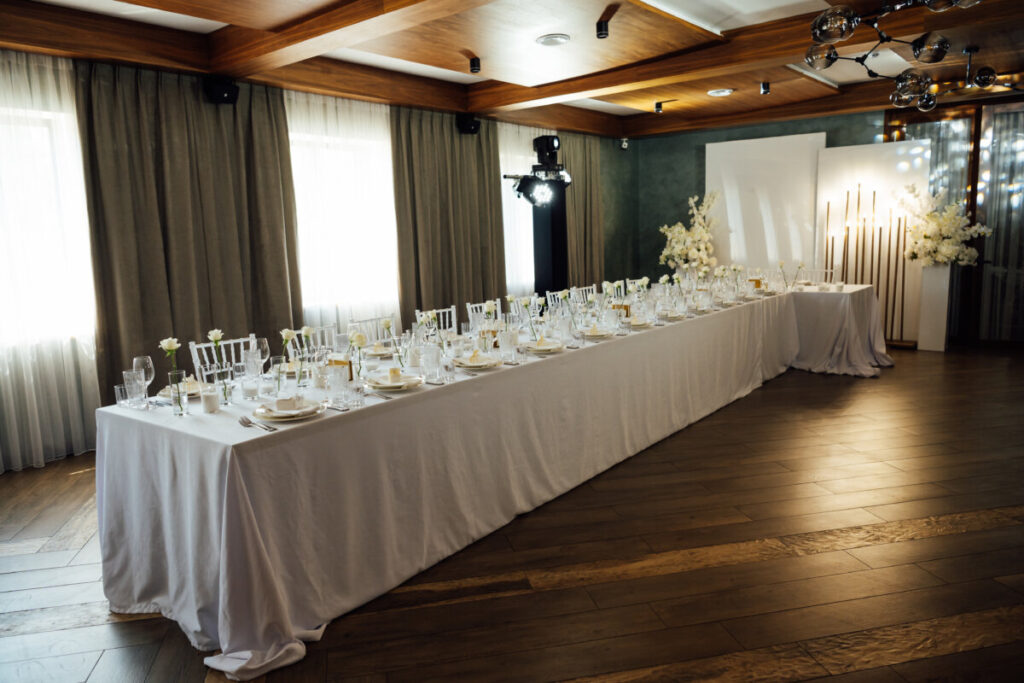
| 90 x 156 | 30 inches (floor) | 30 inches (floor) | Full floor length all around |
Notice the 60 x 120 gives different drops on the sides and ends. That’s normal. The width adds 30 inches to a 30-inch table, so each long side gets 15. The length adds only 24 inches to a 96-inch table, so each end gets 12. Nobody sitting at the table will notice, and nobody sits at the ends of most banquet tables anyway.
Measure Before You Trust the Label
“8-foot table” describes the length and almost nothing else. Most are 30 inches wide, but some run wider, and heights vary by an inch or so. Five minutes with a tape measure saves you from a cloth that stops short.
- Measure the tabletop. Get the real length and width in inches. A standard 8-foot banquet table should read close to 96 by 30.
- Measure the height. Go from the floor to the top of the table. This number caps your drop if you want floor length.
- Pick your drop. Decide how far the cloth should hang below the edge: roughly 8 to 12 inches for casual, about 15 for lap length, or the full table height for floor length.
- Do the math. Width plus two drops, length plus two drops. An online tablecloth calculator runs the same formula if you’d rather not.
- Round to a stock size. Rental linens come in set sizes, so go to the nearest size that’s equal or a little bigger, never smaller.
Rounding up matters more than people expect. A cloth an inch too long brushes the floor and looks deliberate. A cloth an inch too short shows a strip of table leg and looks like a mistake.
How the Drop Changes the Look
The drop is the part of the tablecloth that hangs past the edge, and it does most of the work in setting the tone. A short drop reads as relaxed: a kids’ party, a casual buffet, a work lunch. A full floor-length drop hides the folding legs and plastic, which is the whole point at a wedding or a gala. Traditional tablecloth etiquette ties longer drops to more formal settings, and that still holds up at rental-table events.
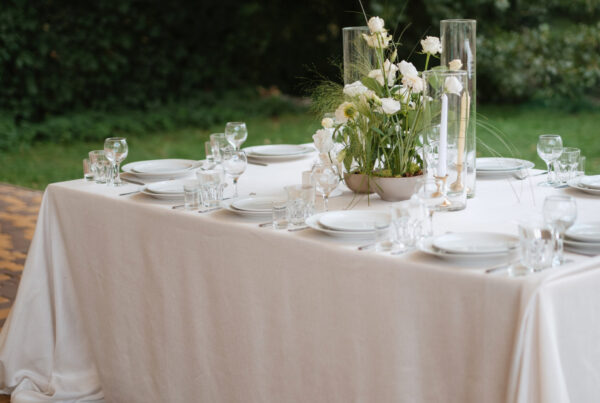
Lap length sits in the middle. On a 30-inch-tall table, a 15-inch drop lands around the seated guest’s lap, so it looks finished without tangling around anyone’s knees. It’s the default for good reason.
One trade-off worth knowing: floor-length cloths look better, but guests do kick them, and at a buffet the hem can catch on shoes. If your crowd skews toward running children, lap length is the honest choice.
Sizing a Floor-Length Cloth for an 8-Foot Table
For a standard 30-inch-tall table, the floor-length answer is 90 by 156 inches. Here’s how that works out on a table that measures slightly differently.
A worked example
Say your 8-foot table measures 96 inches long, 30 inches wide and 29 inches tall, and you want the cloth to reach the floor.
- Width: 30 + (2 x 29) = 88 inches
- Length: 96 + (2 x 29) = 154 inches
Nobody stocks an 88 by 154, so round up to 90 by 156. That gives (90 – 30) / 2 = 30 inches of drop on the sides and (156 – 96) / 2 = 30 inches on the ends. On a 29-inch table, that’s 1 extra inch resting on the floor all the way around, which looks clean.
Now the lap-length version of the same table. For a 12-inch drop you’d need 30 + 24 = 54 by 96 + 24 = 120. The closest stock size is 60 by 120. The length matches exactly, so each end gets the 12 inches you planned. The width doesn’t: rental cloths jump from narrower sizes straight to 60 inches wide, so you end up with 6 extra inches across, or 3 more per side. That puts the long sides at 15 inches instead of 12, which still sits comfortably at lap height and is the standard look for this table.
Puddling the cloth on purpose
Some planners like extra fabric pooling on the floor for a softer, draped look. That means going a size or two above floor length, which is fine for a sweetheart or cake table that nobody walks past. On a guest table or buffet, puddled fabric is a tripping hazard with good intentions.
The 90 by 132 Shortcut and Why It Leaves the Ends Short
The 90 by 132 is a floor-length size for a 6-foot table, and it sometimes gets ordered for 8-foot tables because it’s what someone had on hand. On a 96-inch table, the long sides hit the floor, but the ends hang only 18 inches, so the legs show at both ends.
That can actually work. If the table is pushed against a wall or butted up to another table, the short ends may be hidden anyway. Just order it on purpose, not by accident. (If you ever do need to dress a 6-foot table, our guide to sizing ivory rectangle tablecloths walks through those numbers.)
Buffets, Head Tables and Tables Set End to End
A buffet line built from two 8-foot tables placed end to end is 192 inches long, and no common rectangle cloth covers that in one piece. The usual fix is one cloth per table. Lay a 90 by 156 on each, then fold the extra end fabric neatly under where the two tables meet, so the seam sits right at the joint. Chafing dishes and platters cover most of it anyway.
Head tables follow the same idea, with one difference: the front is what everyone photographs. Use floor length there, even if the guest tables get lap length. Mixing drops across a room is common and nobody’s grading you on consistency.
Another option is layering. A floor-length base in white or ivory with a square overlay on top adds color without buying into a second full set of long cloths. Picking that second shade is easier with a plan, and our piece on choosing an event color palette can help.
Outdoor Tables and the Wind
A floor-length cloth on a lawn is basically a sail. In a Brooklyn backyard boxed in by fences, it’s usually manageable. On an open Long Island lawn or a New Jersey deck with a breeze off the water, a 90 by 156 can lift right off the table before dinner. Table clips help, and a centerpiece or a couple of weighted items keep the top from shifting.
Grass also stains hems. If the cloth is going to drag on a damp lawn, lap length keeps the fabric clean and keeps you from paying attention to it all night.
Fabric, Color and How Many to Order
Polyester is the workhorse for rental linens: it resists wrinkles, holds color and handles a spill better than you’d guess. Natural linen drapes softer but creases. Our breakdown of polyester vs linen tablecloths covers the details.
For quantity, the rule is simple: one cloth per table, plus a spare or two for spills and that one table someone adds at the last minute. Don’t forget the tables nobody sits at, like the gift table, the DJ’s table and the cake table. If you’re working out a whole room, the guide on how many tablecloths you need counts it out.
B&B carries a range of tablecloths and linens in different colors and sizes, along with the 8-foot tables themselves, so you can match cloth to table in one order instead of guessing across two companies.
What to Confirm Before You Book
- The exact width and height of the 8-foot tables you’re getting, not just the length
- Whether you want lap length (60 x 120) or floor length (90 x 156) for each table
- Which tables need a different drop, such as the head table, cake table or buffet
- How many tables are going end to end and how the cloths will overlap
- Whether any tables will sit outside, and what you’ll use to hold the cloths down
- A spare cloth or two in each size you’re using
- Colors for base cloths and any overlays
Get the Tape Measure Out First
For almost every standard 8-foot rectangle table, it comes down to two sizes: 60 by 120 for lap length, 90 by 156 for the floor. Measure your tables, pick a drop that suits the event, and round up when in doubt. If you’d like help matching linens to the tables you’re renting, get in touch with our team and tell us what you’re planning.