


The sterno holder is the small ring or cup in the base of a chafing dish stand, and its job is to hold the fuel can under the water pan, never under a bare food pan. The safe order is frame, holders, hot water, fuel, flame, preheat, then hot food, with anything that can burn kept well away from the flames. Get that sequence right and your buffet stays hot from the first plate to the last.
Most hosts get the parts right and the order wrong. Here’s how the pieces fit together, which fuel to buy, how many cans you’ll actually burn through, and the small mistakes that turn a good spread into a tray of tepid ziti.
What Sits Where in a Chafing Dish
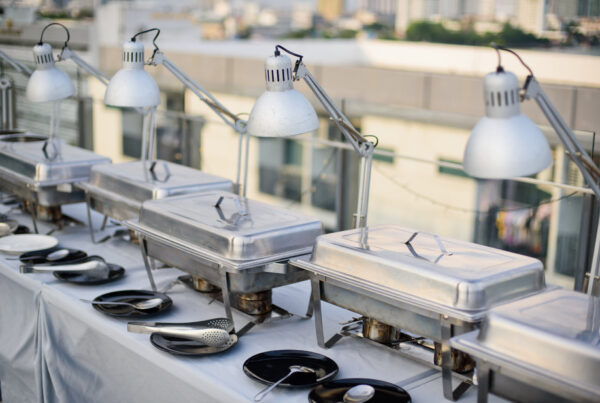
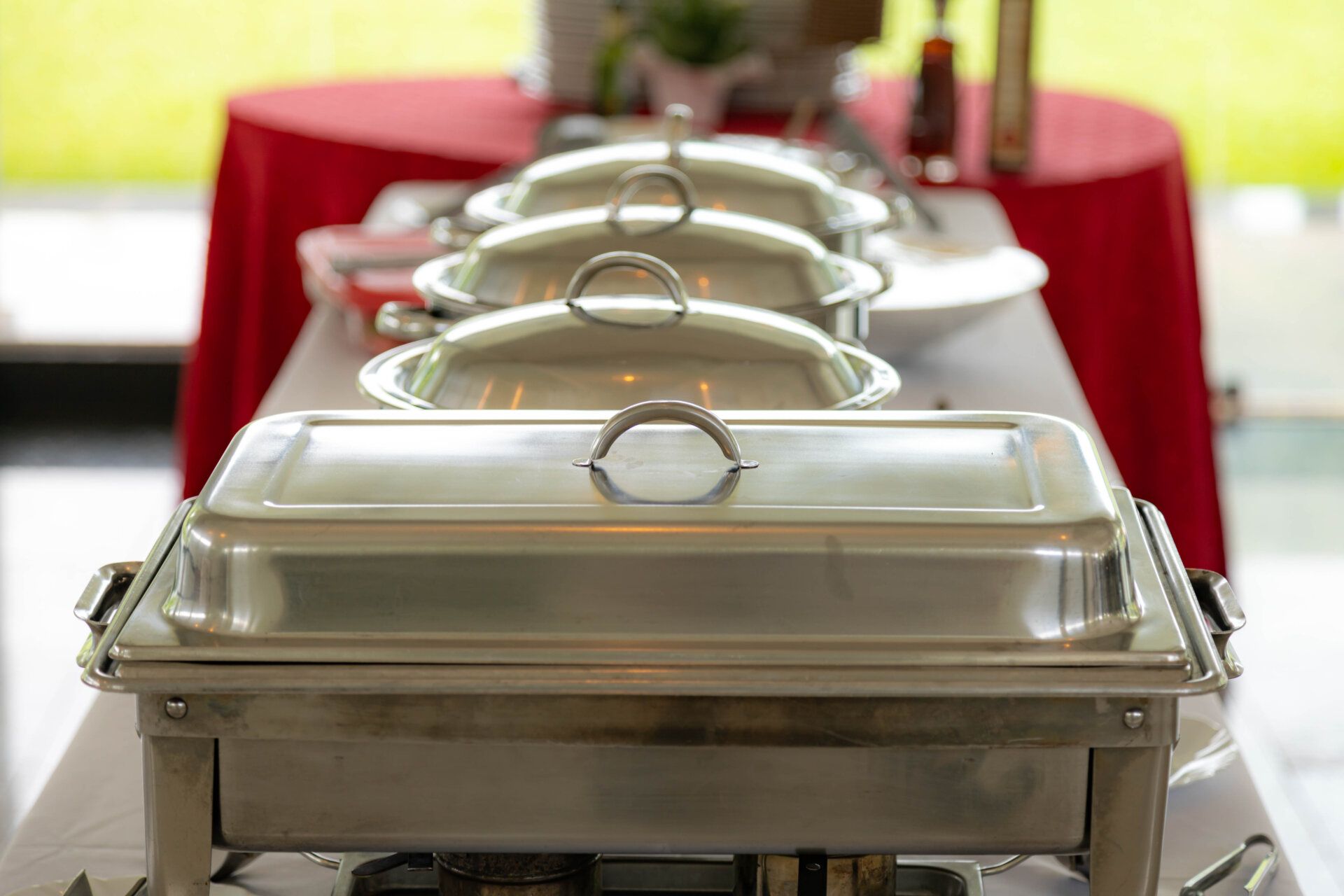
A standard chafing dish has five parts, stacked from the table up:
- The frame or stand, which lifts everything off the table and leaves room underneath for the fuel
- The fuel holders, mounted in or on the base of the frame
- The water pan, which sits in the frame directly above the holders
- The food pan, which nests inside the water pan
- The lid
Sterno holders for chafing dishes come in a few styles. Some are fixed rings built into the frame. Others are loose cups that slide into a slot or clip onto a crossbar, and many come with a hinged or separate cover that doubles as a snuffer. A full-size rectangular chafer usually has two holders, one under each end. Round and smaller chafers often have just one.
If your stand has two holders, use both. One can under a full-size pan heats one end and leaves the other end lukewarm, and guests always seem to scoop from the cold side.
Gel Cans and Wick Cans Burn Differently
The fuel that goes into a sterno holder comes in two main types. Gel fuel is the classic jellied can most people picture. Wick fuel is a liquid sealed in a can with a wick poking out of the lid. Both fit standard holders, but they behave differently over a long buffet.
Here’s an honest look at gel cans, since they’re what most people grab first:
Pros
- Sold almost everywhere, including restaurant supply stores and big-box chains
- Fits nearly every standard holder
- Easy to put out by setting the lid back on
- No outlet or extension cord needed, so the buffet can go anywhere
Cons
- Shorter burn time, so longer events need mid-service swaps
- The flame can be close to invisible in daylight, which makes it easy to touch a lit can by accident
- Wind outdoors knocks it down or blows it out
- Some venues don’t allow open flame at all
Wick fuel generally burns longer and steadier, which is why caterers running a three- or four-hour service often prefer it. It usually costs a bit more per can. Burn times vary by brand and size: gel cans are commonly sold in roughly two-hour sizes, and wick cans often run somewhere around four to six hours. Trust the label on the can you actually bought, not a number you saw online.
Setting Up the Holders and Fuel in Seven Steps
The University of Maryland, Baltimore fire marshal’s office publishes guidelines for using and storing chafing fuel that line up with how experienced caterers work. This is the practical version.
1. Put the line where nothing can catch
Set chafers on a sturdy table, away from walls, drapes, backdrops and doorways where people cut through. Keep paper napkins, menus, floral arrangements and dangling greenery out of the area around the flames. A tablecloth under the chafer is normal, but tuck in any loose overhang near the front where someone could brush it into the base. Our buffet table setup guide covers spacing and traffic flow for the rest of the line.
2. Assemble the frame and seat the holders
Open the frame fully and make sure it doesn’t rock. Slide or clip the holders into place before anything goes on top. Once the water pan is in, reaching underneath to fix a crooked holder gets awkward.
3. Add the water pan and hot water
The water pan goes into the frame, and an inch or two of hot water goes into it. The food pan rests in that water, which spreads the heat evenly and keeps the bottom layer from scorching. The Ramapo College fire marshal’s chafing dish fuel policy says it plainly: food pans sit over a water pan, not directly over the fuel. Start with hot water, not cold. If you’ve rented a hot water urn for coffee, it doubles as the fastest way to fill water pans.
4. Open the fuel and set it in the holder
Take the lid off each can (keep the lids nearby, you’ll need them later) and place the can in the holder before lighting. Never light a can in your hand and then try to place it.
5. Light with a long lighter
Use a long-reach lighter or fireplace match and keep your face and sleeves clear. In bright light, hold your hand above the can at a safe distance to feel for heat, because you may not see the flame.
6. Preheat with the lid on
Put the empty food pan in and close the lid for roughly 15 to 20 minutes before food arrives. This gets the water hot so the pan isn’t stealing heat from the food the moment it goes in.
7. Load food that’s already hot
A chafing dish holds heat. It doesn’t cook and it’s slow at reheating. Food should come out of the oven or kitchen at serving temperature. The FDA’s guidance on serving safe buffets puts the target for hot food at 140°F or warmer, and the chafer’s job is to keep it there.
How Many Fuel Cans You Actually Need
This is where people come up short. Count holders, not chafers, then divide your total burn time by the can’s rated time and round up.
Say you have six full-size chafers, each with two holders, for a three-hour buffet. That’s 12 holders. Add about 20 minutes of preheat and you’re burning for roughly 3 hours 20 minutes.
- With two-hour gel cans, each holder needs 2 cans (one burns out around the two-hour mark, the second covers the rest). 12 holders x 2 = 24 cans.
- With six-hour wick cans, one can per holder covers it. 12 holders x 1 = 12 cans.
Then buy a few extra. Cans occasionally fail to light, wind blows some out, and someone always decides to keep the mac and cheese out for another hour. If you’re still working out how much food goes in each pan, our piece on how many guests a half pan feeds pairs well with this math.
Keeping Food Hot Once Guests Start Eating
The chafer does most of the work, but somebody has to watch it. A few habits make the difference:
- Close lids between servings. An open chafer loses heat fast, especially near a door or an air conditioning vent.
- Check the food with a probe thermometer every half hour or so. If it’s dropping toward 140°F, the fuel is fading or the water has run low.
- Top up the water pan with hot water as it evaporates. A dry water pan means scorched food at the bottom and cooling food at the top.
- Refill with a fresh pan instead of dumping new food onto old. It’s cleaner and the new pan arrives hot.
For larger events, an oven warmer behind the line makes that last habit easy. Backup pans wait at temperature, and when one runs low you swap the whole pan in under a minute.
Swapping and Snuffing Cans Mid-Service
Never blow out a chafing fuel can. Slide the lid or the holder’s snuffer cover over it and leave it closed until the flame is out. Give the can a few minutes before handling it, and use tongs or a heat-safe glove because the metal stays hot well after the flame is gone.
Don’t try to refill a partly used can, and don’t drop a fresh can on top of one that’s still burning. Pull the spent can, set it somewhere fireproof to cool, then place and light the new one. Keep spare cans in a box under or behind the serving station, not on the table next to a lit chafer. And don’t move a chafing dish while the fuel is lit. Snuff it first, move it, relight.
City Venues, Backyards and Open Flame
Plenty of Brooklyn event spaces, from a Williamsburg loft to a synagogue social hall, have their own rules about open flame, and they vary. Some are fine with canned fuel, some restrict it, and some don’t allow it at all. Ask before you buy forty cans. If a venue says no flame, plan on keeping food in warmers in the kitchen and bringing out smaller pans more often. For anything beyond a private home, confirm current requirements with the venue and the local fire department, since they’re the ones who decide.
Outdoors on a Long Island lawn or a New Jersey patio, wind is the problem. Set the buffet so the table’s back faces the breeze, keep lids closed, and walk the line regularly, since a blown-out can doesn’t announce itself. Afternoon sun also makes gel flames even harder to see, so tell whoever is running the food which cans are lit.
Mistakes That Cool the Food or Start Trouble
- Skipping the water pan and setting the food pan straight over the flame
- Putting cold or room-temperature food in and expecting the chafer to heat it
- Using one can under a full-size pan built for two
- Leaving lids open for the whole service
- Letting foil or plastic wrap hang down toward the fuel
- Running a three-hour buffet on one two-hour can per holder, with no spares
- Setting chafers at the edge of a table where kids can reach the base
For the bigger picture on renting and staging warmers, urns and refrigeration, see our guide to party catering equipment in NYC.
Questions We Hear a Lot
Where does the sterno holder go on a chafing dish?
In the base of the frame, directly under the water pan. On full-size rectangular chafers there are usually two holders, one toward each end, so heat reaches the whole pan.
Can you use a chafing dish without the sterno holder?
It’s not a good idea. The holder keeps the can centered and stable under the pan. A loose can on the table can tip, sit too far from the pan, or end up under a linen edge.
How long does a can of sterno last in a chafing dish?
It depends on the type and size. Gel cans commonly run around two hours and wick cans often run longer, roughly four to six hours. Check the label and plan swaps around that number.
Do sterno holders fit every fuel brand?
Most standard holders take standard-size fuel cans from the common brands. Oversized or specialty cans may not fit, so test one can in the holder before the event, not during it.
Is it safe to use sterno fuel indoors?
Caterers use it indoors all the time with sensible precautions: clear space around the flames, a stable table, and no moving lit chafers. Some venues restrict open flame, so ask the venue first and confirm any rules with the local fire department.
Light Them Late, Check Them Often
Set the holders, fill the water hot, preheat, and bring the food out hot. Then put one person in charge of lids, water and fuel for the whole service, and the last guest in line eats as well as the first. If you’re planning a buffet in Brooklyn or nearby and want chafing dishes, oven warmers or hot water urns delivered, tell us your headcount and menu and we’ll help you work out what the line needs.