


The caterer drops off trays of baked ziti and short ribs in the late afternoon, guests aren’t due for a couple of hours, and your kitchen counter has turned into a staging area with nowhere to keep anything hot or cold. That gap is exactly what catering equipment is for. For most private parties, the list is short: chafing dishes to keep hot food hot on the buffet, an oven warmer to hold food before it goes out, hot water urns for coffee and tea, a refrigerator or freezer for cold food, drinks and ice, and enough tables and bar space to put it all on.
This guide covers each piece, how many you’ll likely need, what tends to go wrong, and the New York specifics (freight elevators, tired outlets, rooftop wind) that nobody brings up until the day of. One thing up front so you plan correctly: a party rental company like B&B Party Rentals supplies the equipment and furniture. Your plates, glassware, flatware, serving utensils and the food itself come from your caterer or a restaurant supply store.
What Counts as Catering Equipment for a Party
Search online for catering equipment and you’ll find two very different worlds. One is the commercial side: ranges, convection ovens, walk-in coolers, prep sinks, and the truck-mounted units a business installs in a van. That’s what a caterer buys to run a company.
The other is event equipment, the gear that goes into a venue, loft or backyard for one night so prepared food stays at the right temperature and gets served without chaos. If you’re hosting a party, this is your world. You’re not cooking a 200-person dinner from scratch on site. You’re receiving, holding, serving and cleaning up.
Think of it in four jobs:
- Keeping hot food hot
- Keeping cold food and drinks cold
- Giving food and drinks a place to live (tables, bars, shelving)
- Handling the mess afterward
Everything below fits into one of those.
The Main Pieces at a Glance
- Chafing dishes keep hot dishes warm on the buffet line. Plan one per hot dish, per side of the buffet, and check your venue’s open-flame rules and your fuel supply.
- An oven warmer holds hot food before it goes out. You need one when food arrives well before serving time, and you’ll want to watch outlet and circuit capacity.
- Hot water urns brew or hold coffee, tea and hot water. Estimate cups, then divide by the urn’s cup rating, allowing for heat-up time and a separate urn for tea water.
- A refrigerator handles cold food, desserts and drinks, meaning anything more than your home fridge can fit. Check doorway width, elevator access and cool-down time.
- A freezer holds ice, ice cream and frozen desserts. Figure roughly 1 to 2 pounds of ice per guest, and think about its weight and placement near an outlet.
- Tables and bars cover the buffet, dessert, drink service and staging, including a dedicated staging table behind the scenes. You’ll need linens to cover them and a plan for traffic flow.
- Trash cans handle cleanup during and after. Get more than you think and put them near food and the bar, along with liners and someone to empty them.
Chafing Dishes Keep the Buffet Hot
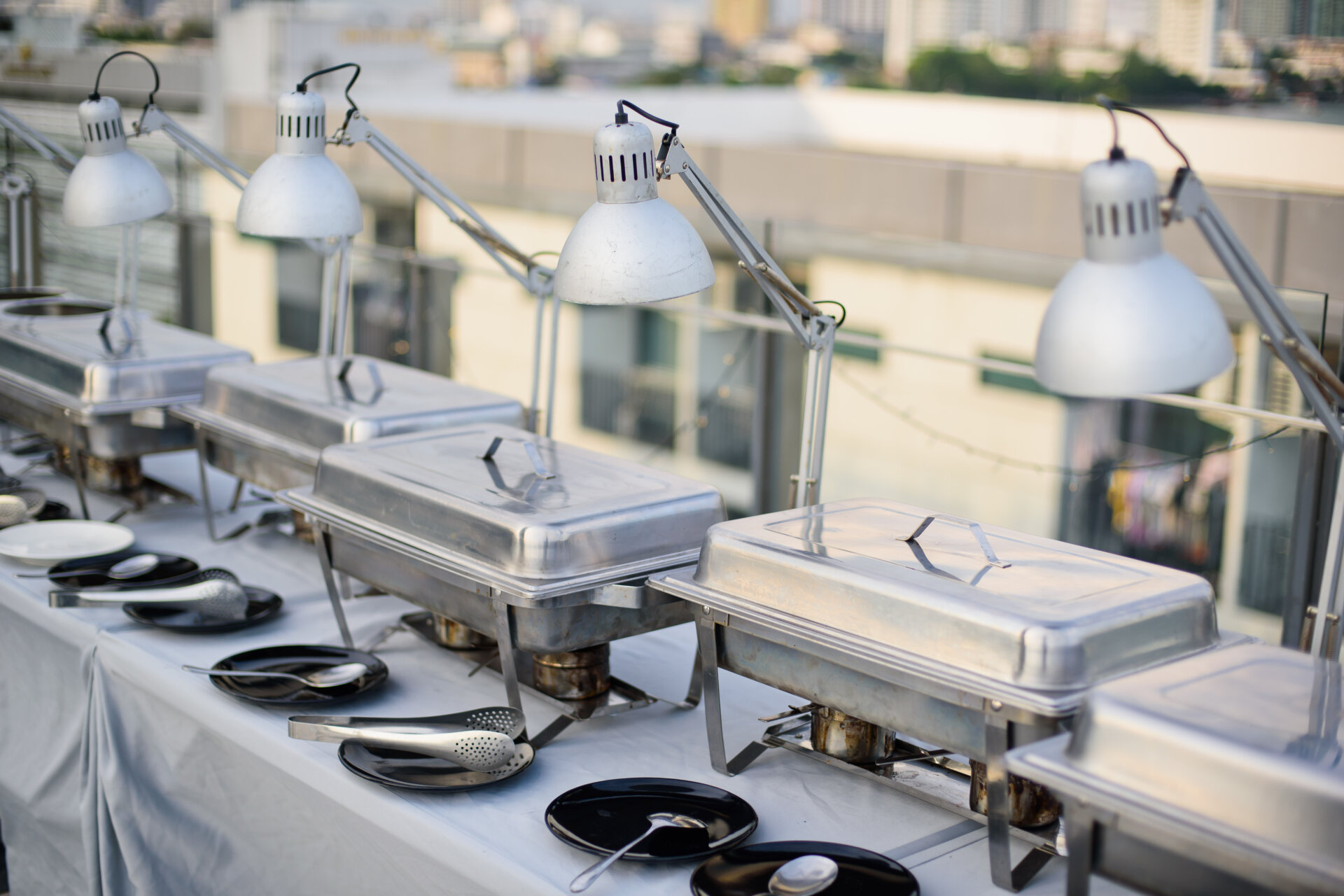
A chafing dish is a frame that holds a water pan with a food pan on top, heated from below. The water spreads the heat so food warms gently instead of scorching. Most standard chafers take a full-size food pan, and many can hold two half-size pans instead, which is handy when you have two smaller hot sides that don’t each need a full pan.
How many chafing dishes you need
Start with one chafing dish per hot item. Then think about lines. A single-sided buffet line works for roughly 50 to 60 guests before the wait gets annoying. From around 60 to 120 guests, go double-sided (both sides of the table, or two separate lines), which means duplicating every hot dish.
So for a party of 100 with four hot dishes, the math is 4 dishes × 2 sides = 8 chafing dishes. If you only have three hot dishes, that’s 6. Cold salads and bread don’t need chafers, though they do need table space.
Table space matters more than people expect. Most full-size chafers run about two feet long (confirm the exact dimensions with your rental company). An 8-foot rectangular table gives you 96 inches, so three chafers fit with room for serving utensils, labels and a hand reaching in. Four would use the whole length with no gaps, which nobody can actually serve from.
Fuel, flames and building rules
Traditional chafers run on canned fuel, which means open flame. Some venues and residential buildings don’t allow it, or only allow it with conditions. Ask building management or your venue coordinator before you order, not after. If flame is off the table, ask your rental company whether electric options are available, and if not, lean harder on an oven warmer and smaller batches brought out frequently.
Also ask whether fuel comes with the rental. Burn times vary by product, so check the label and buy extra. Running out of fuel halfway through dinner is a quiet disaster: nobody notices until the short ribs are lukewarm.
On a rooftop or in a backyard, wind is the other problem. It blows out chafing dish flames and cools food fast, so group the chafers out of the breeze and keep lids on between servings. In summer, keep refrigerators and urns out of direct sun too. Our outdoor party rental checklist for NYC covers weather backups and layout.
Test them before guests arrive
Not every warmer gets food hot enough. The FDA’s consumer page on serving safe buffets recommends keeping hot buffet food at 140°F or warmer and warns that some warming trays and chafing dishes only reach 110 to 120°F. Light the chafers about 20 to 30 minutes before food goes out, add hot water to the water pan (not cold, which slows everything down), and check with a food thermometer once food is in. Chafers are for holding hot food, not reheating cold food, so make sure everything goes in already hot.
Oven Warmers Bridge the Gap Between Delivery and Dinner
Here’s the scenario that catches people: the caterer delivers at one time, dinner is served at another, and the food has nowhere to wait. An oven warmer solves that. It’s an insulated, plug-in cabinet that holds pans of hot food at serving temperature until you’re ready.
Clemson Cooperative Extension’s guide to food safety for community suppers lays out the basics: keep hot food at 140°F or higher, don’t leave hot food sitting out for more than two hours, and if it won’t be served within two hours, hold it in an oven at 200°F to 250°F.
Run your own timeline. If the food arrives at 5:30 and dinner starts at 8:00, that’s two and a half hours, past the two-hour mark, so it needs real hot holding. A home oven can sometimes cover a small party, but it holds a few pans at most and you’ll probably want it for something else. An oven warmer gives you a dedicated holding spot, often right next to the buffet.
Two practical notes. First, it needs power, so pick a spot near an outlet that isn’t already running a coffee urn and a refrigerator (more on that below). Second, ask your caterer how many pans they’re bringing and what sizes, then ask the rental company how many pans the warmer holds. That one conversation saves a lot of shuffling on the night.
Hot Water Urns for Coffee and Tea
Hot drinks show up at more parties than people plan for. Brunches and winter events need them, and so do dessert hours, shivas and anything with an older crowd. A hot water urn either brews coffee or keeps water hot for tea and cocoa.
To size it, estimate cups, not guests. Say you have 80 guests and expect about 60 to drink coffee or tea, at roughly one and a half cups each. That’s 60 × 1.5 = 90 cups. Divide by the urn’s cup rating and round up. With a hypothetical 50-cup urn, 90 ÷ 50 = 1.8, so you’d want two urns, or one urn plus a refill you start early enough to be ready.
A few things people learn the hard way:
- Urns take time to heat up, so ask how long and plug them in well before you need them.
- Use a separate urn for tea water. Water from a coffee urn tastes like coffee.
- Set them on a sturdy table away from the main walkway, with the spout facing guests, not a wall.
Cups, lids, stirrers, sugar and creamer are on you or your caterer.
Refrigerators and Freezers Are the Most Underrated Rental
Most hosts plan the hot side carefully and then try to cram cold food, desserts, three cases of seltzer and a sheet cake into a standard apartment fridge. It doesn’t work. A rented refrigerator gives your caterer a place for cold platters, salads, cut fruit and desserts, and gives the bar a place for mixers and backup drinks.
The FDA’s buffet guidance also covers the cold side: cold food should stay at 40°F or colder. A rental fridge that’s plugged in and given time to cool before you load it is the easiest way to keep things there for a long event.
Freezers and the ice question
Ice is the item every party underestimates. A common rule of thumb is about 1 to 2 pounds per guest, toward the high end in summer or if you’re chilling drinks in tubs. For 100 guests, that’s 100 to 200 pounds of ice. Bagged ice left in a bathtub melts. A one-door freezer lets you buy ice ahead of time and keep it solid, along with ice cream or frozen desserts if they’re on the menu.
Getting it in the door
Before you book, measure. Refrigerators and freezers are heavy and not small. Check the narrowest doorway, hallway turn and stairwell on the route from the street to where the unit will sit. In a walk-up, ask your rental company directly whether stairs are an issue and how many flights.
In elevator buildings, many co-ops and condos require deliveries to use the freight or service elevator during set hours and ask vendors for a certificate of insurance. Call building management early and pass the rules to your rental company so the paperwork is handled before delivery day. Once the unit is in place, give it time to cool before you load it, and confirm how long that takes when you order.
Tables, Bars and Surfaces Hold It All Together
Equipment needs somewhere to go. The surfaces are where a buffet either flows or turns into a pileup.
Plan at least these:
- Buffet tables, sized using the chafer math above
- A staging or prep table out of sight, where the caterer can plate, refill and stash empty pans
- A dessert table, if desserts aren’t going on the buffet
- A drink station or bar
- A small table for the coffee urns
For the buffet, 6-foot and 8-foot rectangular tables are the workhorses; browse the table rentals to see options like serpentine and half moon tables that make a line feel less like a cafeteria. Cover every one of them. Chafers drip, coffee spills, and bare folding tables look like a church basement. Our guide on how many tablecloths you need walks through the counting, including the service tables people forget.
If you’re serving drinks, a rented bar with a back bar behind it gives the bartender a real workspace and somewhere to keep bottles and backups off the counter. See the bar rentals for styles. For the drinks-first part of the evening, our piece on setting up an elegant cocktail hour covers bar placement and flow.
And trash cans. Put one near the buffet, one near the bar, one near the dessert table and a couple behind the scenes. Overflowing trash is the fastest way to make a nice party look tired by 9 p.m.
Power Is the Thing Everyone Forgets
Oven warmers, refrigerators, freezers and coffee urns all plug in. Several of them on one circuit is how you trip a breaker in the middle of toasts.
Older brownstones and prewar apartments are the usual offenders. Two outlets on the same wall are often on the same circuit, and the kitchen may already be carrying your own fridge and microwave. Before the event, find your breaker panel, figure out which outlets are on which circuit (flip one and see what goes dark), and spread the heavy draws out. Ask your rental company about the power needs of each piece, and avoid running high-draw equipment through flimsy household extension cords.
For a backyard or rooftop with limited or no outlets, sort out power with your venue, building or an electrician before you commit to plug-in equipment. B&B doesn’t rent generators, so if power is the bottleneck, plan the menu around it: more canned-fuel chafers if flame is allowed, coolers for drinks, and food timed to arrive closer to serving.
Permits Belong to Your Caterer
In New York City, food permits are generally tied to preparing and serving food, not to renting tables or a refrigerator. Businesses that prepare and serve food in the city generally need a Food Service Establishment Permit, and that’s normally your caterer’s responsibility, not the rental company’s. A licensed caterer should already have it.
Public events are a different story. If your event is open to the public or held outside a permanent kitchen, like a street fair, a festival booth or a fundraiser in a park, the city generally requires a Temporary Food Service Establishment Permit, with a food protection certificate holder on site. Requirements vary by event and can change, so confirm what applies to you on the city’s NYC Business permit pages or with the agency directly before you plan the menu. Parks and street events may also need their own separate approvals.
A private party in your home or a rented venue with a licensed caterer usually doesn’t put any of this on you. Still, ask your caterer exactly what they handle, and check with the city if anything about your event is unusual.
Renting or Buying Catering Equipment, Including Used Gear
For a one-off party, renting almost always wins. You don’t store a freezer in a studio apartment for the eleven months a year you don’t need it. You also skip the cleaning and maintenance, and you never have to figure out what to do with eight chafing dishes afterward.
Buying makes sense if you host constantly or you’re starting a catering business. In that case, used catering equipment from restaurant auctions or resellers can save real money, though you’re taking on wear, missing parts and no delivery. Inspect thermostats, seals and hinges before you buy anything secondhand. Our article on renting vs buying event equipment goes deeper on the trade-offs.
What to Ask Before You Book
Catering equipment companies and party rental companies vary a lot in what they include. Get answers to these before you commit:
- Do you deliver, set up and pick up, and is there a window for each?
- What are the dimensions and weight of the refrigerator or freezer, and can you handle stairs?
- Does the chafing dish rental include water pans, food pans or fuel?
- What are the power requirements for the oven warmer, fridge and urns?
- How many cups does each urn hold, and how long does it take to heat?
- How many pans fit in the oven warmer, and what sizes?
- Can you provide a certificate of insurance for my building?
- What condition should equipment be in when you pick it up? Do I need to clean it?
For a longer list that covers furniture and contracts too, see these essential questions to ask your party rental provider.
Quick Checklist for Catering Equipment
- Chafing dishes: one per hot dish, per buffet side
- Chafing fuel, plus extra
- Oven warmer if food waits more than two hours
- Hot water urns, with a separate one for tea
- Refrigerator for cold food and drinks
- Freezer for ice and frozen desserts
- Buffet, dessert, staging and coffee tables
- Bar and back bar if you’re serving drinks
- Linens for every table
- Trash cans near food, drinks and the back of house
- Food thermometer
- A power plan, circuit by circuit
- Building rules and certificate of insurance sorted
Frequently Asked Questions
Where can I rent catering equipment in NYC?
Party rental companies are the usual source for event-side gear like chafing dishes, oven warmers, hot water urns, refrigerators, freezers, buffet tables and bars. Restaurant supply rental specialists handle heavier commercial kitchen equipment. Pick a company that delivers, sets up and picks up, and confirm they can handle your building’s elevator and insurance requirements.
How much does catering equipment cost?
It depends heavily on the job. Renting a few pieces for one event costs a fraction of buying them, while outfitting a catering business with new commercial kitchen equipment is a major investment. Used equipment lowers that cost, but get quotes for your actual list rather than relying on averages, since prices vary by item, quantity and season.
What catering equipment does a caterer’s kitchen need?
A commercial caterer’s kitchen typically needs commercial refrigeration and freezer space, cooking equipment like ranges and ovens, hot-holding cabinets, insulated food carriers for transport, prep tables, sinks that meet health code, and shelving. Requirements are set by the health department, so anyone starting a catering business should check the city’s permit requirements before buying anything.
How many chafing dishes do I need for 100 guests?
Count your hot dishes, then double them for a two-sided buffet, which is the usual setup around this size. With four hot dishes, that’s 8 chafing dishes. With three, it’s 6. Cold dishes and bread don’t need chafers.
Can I use chafing dishes in an apartment?
Often yes, but canned fuel is an open flame, and some buildings restrict it. Check with building management first. If flame isn’t allowed, ask about electric options or plan around an oven warmer and smaller pans brought out more often.
Get the Hot and Cold Sorted First
Catering equipment isn’t glamorous, and nobody compliments the freezer. But the parties people remember as relaxed are almost always the ones where the food stayed hot, the drinks stayed cold and the host wasn’t sprinting between a stove and a bathtub full of ice. Lock in the hot holding, the cold storage and the power plan, and the rest gets easier. When you’ve got your guest count and menu in hand, reach out to B&B Party Rentals and we’ll help you figure out what you actually need.