


You want to know if chair sashes are outdated, or more bluntly, whether tying a bow on every chair will make your wedding look like a hotel ballroom from 2005. One version has aged badly. The idea behind it hasn’t, and plenty of couples still use a sash when it’s actually doing a job.
The short answer
The wide, shiny satin bow over a white spandex chair cover is the look most people now call dated. A thin, soft sash, a sprig of greenery, or a good-looking bare chair reads current, and a classic sash still fits a formal ballroom or a venue with chairs you’d rather hide.
Why the Big Satin Bow Fell Out of Favor
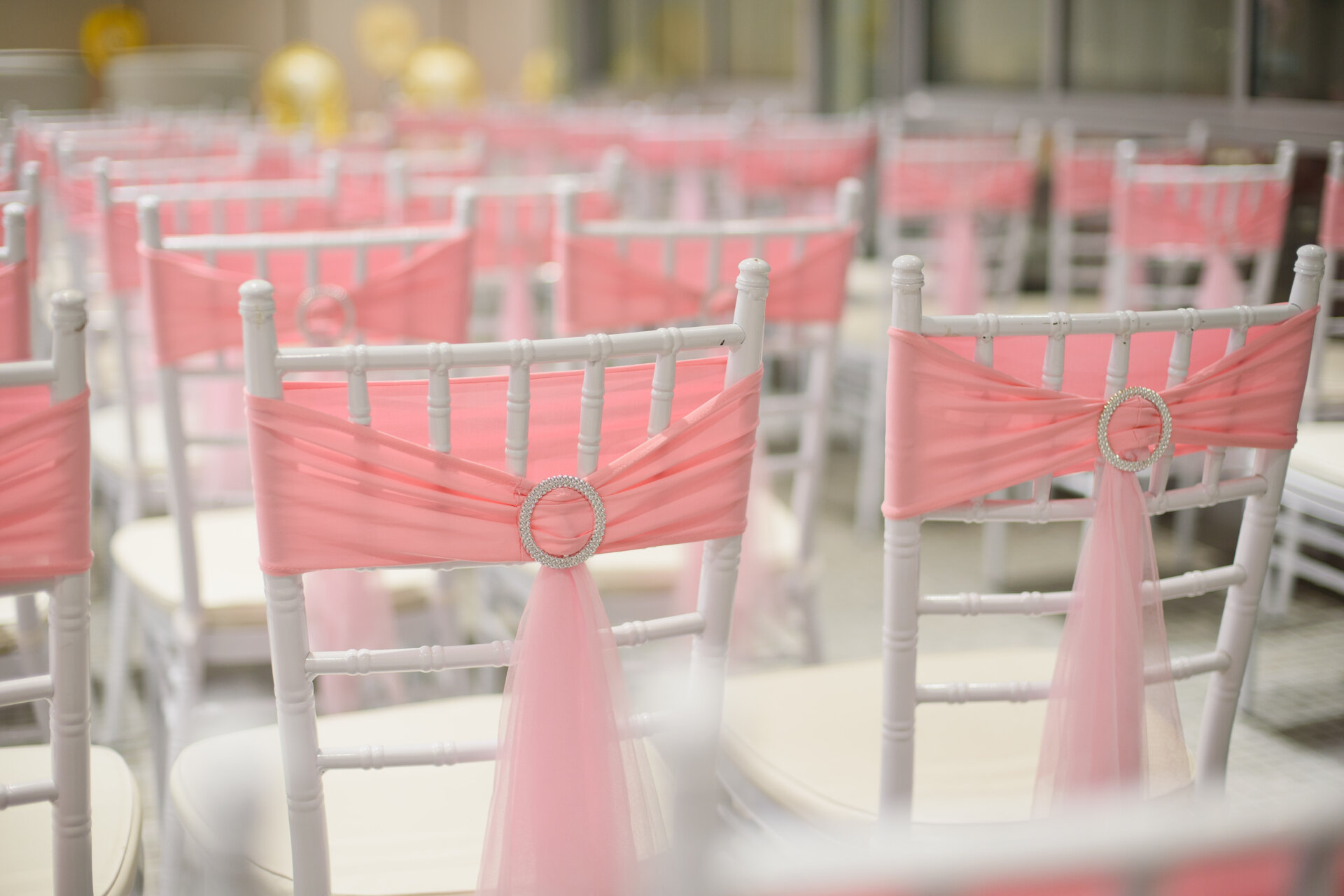
For years the banquet hall package was the same almost everywhere: stackable chairs, stretchy white covers, and a glossy satin sash pulled into a fat bow in the wedding color. It made sense. It hid chairs nobody wanted in the photos. It also meant thousands of weddings looked identical, and when everyone’s album has the same chairs, the look gets tied to an era.
Two things changed. Chair rentals got better, so couples could book gold chiavari, wood cross back or clear acrylic chairs that look good with nothing on them. And taste drifted toward texture and natural materials, which made stiff, shiny satin look like costume fabric sitting next to linen napkins and loose greenery.
Shine and size are the giveaways. Most of what people call dated is the satin and the oversized bow, not the act of putting something on a chair.
A Five-Step Way to Decide
Skip the trend debate and run your own wedding through this. It takes about ten minutes and one chair.
- Look at the chair you’re actually getting. If the venue’s house chairs are scuffed metal stackers, some kind of dressing helps. If you’re renting chairs with nice lines, a sash mostly covers up what you paid for.
- Name the job. Adding color, hiding a chair, marking reserved seats or honoring a family tradition are all real jobs. If you can’t name one, you probably don’t need sashes.
- Match the fabric to the formality. Satin and organza lean formal, while chiffon, cheesecloth and linen feel looser and more relaxed. Zola’s guide to choosing chair sashes breaks down which materials suit formal receptions and which suit whimsical ones.
- Dress one chair as a test. Tie it, step back about 15 feet and take a phone photo. That’s roughly how guests and your photographer will see a row of them.
- Count the labor. Someone has to tie every sash before the ceremony and pull every one off at the end of the night. Decide who before you order.
When a Sash Still Earns Its Place
There are honest reasons to use them, and none of them are about being on trend.
- The venue has chairs you can’t swap and don’t love. A cover plus a soft sash is often the cheapest fix.
- You’re in a formal ballroom with crystal, tall centerpieces and a black-tie crowd. A classic sash in a muted tone sits fine in that kind of room.
- You want your palette in the room without buying flowers for every table. If you’re still settling on shades, our piece on selecting your wedding colors helps.
- You only want to mark the aisle or the family rows at the ceremony, which is a small, deliberate use. Our guide to planning a ceremony chair layout shows where those reserved rows usually go.
Cultural and religious weddings often have their own decor traditions, too. A sash that matches what the family expects isn’t outdated. It’s correct for that room.
Versions That Look Current
If you like the idea but not the bow, change the fabric and shrink the gesture.
- Thin chiffon or silk ribbon tied loosely, with long tails hanging down the chair back
- Velvet ribbon in a deep tone for a fall or winter date
- A sprig of eucalyptus or a single stem tied on with twine
- Loose cheesecloth draped over the top rail of wood chairs for a garden or barn feel
- Small signs or name cards on reserved chairs only
Partial dressing is where a lot of planners land now. The aisle chairs and the couple’s chairs get something special, and everything else stays bare. If you haven’t decided how the couple will sit at the reception, our breakdown of sweetheart table vs head table covers it. Dressing a handful of chairs looks intentional. Dressing all of them in shiny satin looks like a package deal.
Color matters as much as fabric. Blush, sage, dusty blue, rust and plain ivory tend to blend in. Bright fuchsia or royal blue satin on every chair is the version that reads most like an old banquet hall photo, even when the rest of the room is modern.
Heads-up
Rental chairs generally have to go back the way they arrived. Before you buy sashes or ribbon, decide who’s tying them on and who’s taking them off, especially if pickup is late at night or the next morning. Tape, pins and floral wire can scratch or mark chair finishes, so ask your rental company what’s allowed on their chairs.
Pick the Chair First, Then the Dressing
Order of operations matters here. Choose the chair, then decide whether it needs anything at all, because the chair settles most of this for you. Browse the wedding seating options before you spend a dime on fabric, and our article on choosing wedding chair rentals that fit your theme walks through matching style to venue.
A few pairings that work:
- Gold ballroom chairs carry a formal room on their own. A sash wrapped around the spindle back hides the exact detail people rent them for, so a thin ribbon or nothing is usually better.
- Clear ballroom chairs and ghost chairs almost disappear, which is the point. A single stem of greenery on the aisle chairs is plenty.
- Wood cross back chairs suit cheesecloth, twine and greenery. Satin on them looks confused.
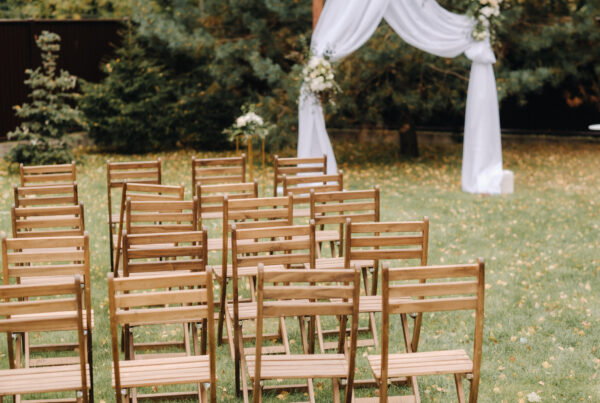
- White folding chairs in neat backyard rows look clean bare. A loose ribbon on the aisle ends finishes them.
The room counts too. In a raw-brick Brooklyn loft, bare wood or black chairs suit the space far better than satin bows ever will. On a Long Island or New Jersey lawn, wind is the issue: long chiffon tails whip around and wrap themselves around chair legs, so tie them short or switch to greenery.
The Labor and Budget Math
This is where a lot of couples change their minds. Say you have 120 guests, with separate chairs for the ceremony and the reception. That’s 240 chairs. Even at an optimistic minute per chair for a neat tie, that’s 240 minutes, or four hours of someone’s wedding day, plus close to that again pulling them off at night.
Now dress only the aisle: 8 rows on each side means 16 aisle chairs, plus 2 for the couple. That’s 18 chairs and well under 20 minutes. Same visual effect where guests actually look, a fraction of the work and the fabric.
Venues and coordinators often charge to place and tie chair decor, so don’t assume it’s included. Ask, and get the answer in writing. In city buildings with tight load-in windows and a shared freight elevator, time spent dressing chairs also comes out of the setup schedule, which matters if tables, linens and bars are going in during the same slot. If the budget’s already stretched, our budget-friendly reception tips point to places where money makes a bigger visual difference than sashes.
Key takeaways
- The shiny satin bow over a spandex cover is the dated part, not sashes as a whole.
- Pick the chair first. Good-looking rental chairs often need nothing.
- Soft fabrics, muted colors and greenery read current.
- Dressing only aisle and couple chairs cuts the work from hours to minutes.
- Settle who ties and removes sashes before anything is ordered.
Bare Chairs Are a Choice Too
Nobody at your wedding is going to lean over and whisper that the chairs are underdressed. If the chair looks good, let it. If it doesn’t, a soft sash or a different chair fixes the problem, and you can test either option with one chair and a phone camera. We’ve been setting up wedding chairs across the city, Long Island and New Jersey from our Brooklyn base for over 25 years, so if you want a second opinion on which chairs can go bare in your venue, send us your date and guest count and we’ll talk it through.