


The most common round table sizes for events are 30, 36, 48, 60, 66 and 72 inches in diameter. As a rough guide, a 48-inch round seats 4-6 guests, a 60-inch round seats 8-10, and a 72-inch round seats 10-12. For most weddings, bar and bat mitzvahs and banquets, the 60-inch round is the workhorse size. It seats 8 comfortably or 10 snugly.
That’s the short answer. The rest of this guide explains where those numbers come from and when to size up or down. It also covers how much floor space each table really needs and which tablecloth fits which table. Along the way you’ll find a couple of NYC details that catch planners off guard, like walk-up stairwells and venue layout approvals.
Round Table Sizes and Seating Capacity at a Glance
Here is the chart we walk planners through most often. “Comfortable” means guests have elbow room for a plated dinner. “Maximum” means it works, but guests will be close and there is less room for centerpieces and place settings.
| Diameter | Comfortable | Maximum | Best For |
|---|---|---|---|
| 30 inches | 2 | 3 | Cocktail and bistro tables, high tops, cafe-style seating |
| 36 inches | 3 | 4 | Small groups, cake or gift tables, sweetheart tables |
| 48 inches | 4 | 6 | Small dinners, apartment parties, tight venues |
| 60 inches | 8 | 10 | Weddings, banquets, most catered events |
| 66 inches | 9-10 | 11 | Events that want a bit more room than a 60 without going to a 72 |
| 72 inches | 10 | 12 | Large family tables, galas, formal dinners with big centerpieces |
These ranges are industry rules of thumb, not hard limits. If you’re working through a full floor plan, EVstudio, an architecture firm, has a post on optimal seating and table layout that is worth reading alongside this guide.
How Seating Capacity Is Calculated
If you want to check any table yourself, the math is simple. A roomy setup gives each guest about 24-30 inches of table edge, while tighter banquet seating often works with something closer to 19-24 inches. To find out how much edge a round table has, multiply the diameter by 3.14 to get the circumference, then divide by the space per guest. For another reference chart, see how many people can sit at a round table.
Take a 60-inch round:
- 60 x 3.14 = about 188 inches of edge
- 188 divided by 24 inches = about 7.8 guests
- 188 divided by 30 inches = about 6.3 guests
So the roomy 24-30 inch range gives about 6 to 8 guests, while most rental charts say 8 to 10. The gap comes from the spacing each one assumes. Rental charts plan on less edge per person than the roomy range. Run the math the other way:
- 188 inches divided by 8 guests = about 23.5 inches each
- 188 inches divided by 10 guests = about 19 inches each
At 8 guests, everyone has about 23.5 inches. That’s half an inch short of the roomy range, a difference most guests won’t notice, and it still leaves space for a full plated place setting. That’s why charts list 8 as the comfortable count. At 10, it drops to about 19 inches, which sits at the very bottom of tight banquet spacing. It works, but guests will bump elbows now and then, so treat 10 as the practical maximum rather than a target.
What Changes the Real Number
- Chairs matter more than most people expect. Slim-profile chairs like chiavari or ghost chairs let you fit more people per table than wider padded or upholstered styles. Our guide to choosing what type of chairs to rent covers how each style affects your layout.
- A plated dinner with chargers, several glasses and bread plates needs more space per guest than a buffet where people bring one plate back to the table.
- Wide or tall centerpieces eat into the usable surface. If the florist is planning something large, size up or seat fewer.
- Kids take up less room, so you can generally fit more of them per table. An adults-only formal dinner usually feels better at the comfortable count, not the maximum.
Choosing the Right Round Table Size for Your Event
Weddings and Formal Dinners
The 60-inch round is the default for a reason. Guests can talk across the table without shouting, and it fits most ballrooms and lofts efficiently. Because it seats a clean 8 or 10, guest-count math stays easy. If you want a more luxurious feel or have large centerpieces, 66- or 72-inch rounds give everyone more room, but the longer distance across the table makes conversation harder for guests sitting opposite each other.
Bar and Bat Mitzvahs, Galas and Large Celebrations
When the guest list runs into the hundreds, the bigger question is how many tables fit in the room. Mixing sizes can help. Use 72-inch rounds for large family groups and 60-inch rounds for most guests, then add a few 48-inch rounds to fill awkward corners or seat smaller groups without empty chairs.
Small Parties and Apartment Gatherings
For a dinner party of 10-12 in a Manhattan apartment or a Carroll Gardens brownstone, two or three 48-inch rounds are often easier than one large table. They fit around columns and radiators, and they naturally split the room into smaller conversation groups.
Size also matters on the way in. A 60-inch round is 5 feet across and a 72-inch round is 6 feet across. Most event rounds have folding legs and can be carried on edge, but a narrow stairwell, a tight hallway turn or a small apartment elevator can still stop them. Measure the tightest point on the path before you order, and tell your rental company about walk-ups or any freight elevator rules. For more ideas, see our article on maximizing small event spaces.
Cocktail Hours and Standing Receptions
Here, 30- and 36-inch rounds do the work, either at standard height with bistro chairs or as high top (highboy) cocktail tables. A common approach is to provide seating for a portion of guests rather than everyone, so the room stays open for mingling.
How Much Floor Space Each Round Table Needs
The table itself is only part of the footprint. Chairs get pushed back, guests walk behind people who are seated, and servers need a path with trays.
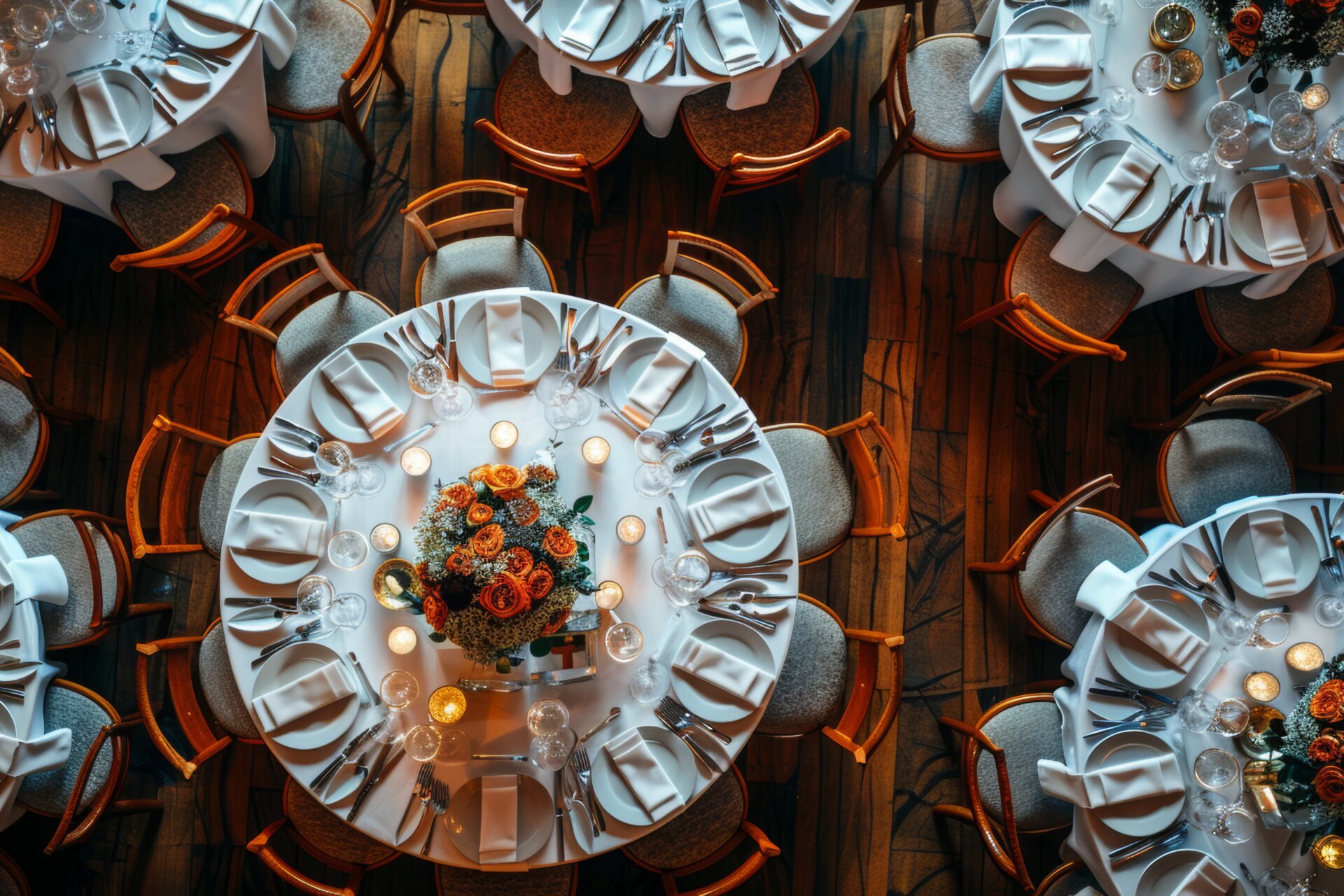
A practical rule of thumb many planners use is to leave about 5 feet between the edges of neighboring tables. That allows two chairs to sit back to back with a walkway between them. Using that spacing, a 60-inch round effectively claims a circle roughly 10 feet across once chairs and aisle space are included, and a 72-inch round claims closer to 11 feet. These are approximate figures, so always lay out your actual room on paper or in a planning tool before committing to a table count.
Also leave room for everything that isn’t a guest table, such as the dance floor, bars, the DJ or band, food and dessert stations, a gift table and clear paths to every exit. For a deeper look at aisles and traffic patterns, read how to arrange tables and chairs for maximum guest flow.
At a larger venue, check the approved layout before you change anything. Many larger venues in Brooklyn and Manhattan operate under a Place of Assembly Certificate of Operation (PACO), and their layouts of tables, chairs and exit paths are part of that approval process. NYC Buildings publishes the design professional requirements for PACO filings. In practice, swapping 60-inch rounds for 72s, or adding tables, may not be as simple as it sounds. Ask your venue coordinator what layout is approved before you change sizes or counts, and confirm any regulatory questions with the venue and the relevant city agency.
Tablecloth Sizes for Round Tables
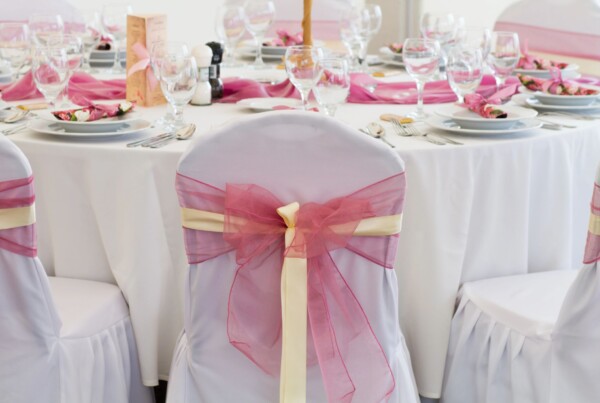
Once you know your table size, linens are straightforward. Most event tables stand about 30 inches tall, so a floor-length cloth needs about 30 inches of drop on every side. Add 60 inches (30 per side) to the table diameter to get the right round tablecloth:
- 30-inch table: 90-inch round for floor length
- 36-inch table: 96-inch round
- 48-inch table: 108-inch round
- 60-inch table: 120-inch round
- 72-inch table: 132-inch round
For a shorter, lap-length drop, a cloth roughly 20-30 inches larger than the table diameter is typical, though floor-length is the standard look for weddings and formal events because it hides table legs and storage underneath. High top cocktail tables are taller, so they need longer cloths or fitted spandex covers. When you’re pricing out linens and tablecloths, confirm the exact table diameter and height with your rental company so the drop comes out right.
Frequently Asked Questions
How many people fit at a 60-inch round table?
A 60-inch round seats 8 guests comfortably and up to 10 snugly. Eight works best for plated dinners with full place settings, while 10 is common for banquets and larger guest lists where you want to keep the table count down.
What size round table seats 10 people?
A 60-inch round can seat 10 in a banquet setting, but a 66- or 72-inch round seats 10 with noticeably more elbow room. If comfort matters more than fitting the maximum number of tables in the room, go with the larger size.
What is the most common round table size for weddings?
The 60-inch round is the most common wedding table. It strikes a good balance between comfort and space efficiency, and its 8-10 seat range makes seating charts easy to plan.
How many people can sit at a 48-inch round table?
A 48-inch round seats about 4 guests comfortably and up to 6 when space is tight. It’s a good choice for small dinners and apartment parties, and it’s handy for filling odd corners of a larger venue.
What size tablecloth do I need for a 60-inch round table?
For a floor-length look on a standard 30-inch-high table, use a 120-inch round tablecloth. That gives a 30-inch drop on every side, which just reaches the floor.
Is a round or rectangular table better for events?
Round tables encourage conversation because every guest can see everyone else, which is why they’re popular for weddings and celebrations. Rectangular tables fit more guests into long, narrow rooms and work well for family-style dining. Many events use both.
Picking the Right Size for Your Guest Count
Start with your guest count and divide by your target seats per table (8 for comfortable 60-inch rounds is a safe baseline). Then check that the resulting number of tables fits your room with about 5 feet between table edges and space left over for bars, food and dancing. Adjust with larger or smaller rounds where the room or your guest groups call for it, and confirm the layout with your venue before finalizing.
Popular sizes, especially 60-inch rounds, get reserved quickly around wedding season and the holidays. Our guide on when to book table rentals explains how far ahead to plan, and you can browse the full range of rental tables to compare round options with rectangular, square, oval and serpentine styles. If you’d like help working out sizes and quantities for an event in Brooklyn or Manhattan, reach out to our team with your guest count and venue details.